Summer Camp Resources
Bringing the Magic Online: a #SHXCamp 2020 Retrospective
Camp Life and Preparation
Bringing the Magic Online: a #SHXCamp 2020 Retrospective
The ASC Theatre Camp (ASCTC) is an immersive, residential theatre intensive where students ages 13-19 get to:
- Perform with Shakespeare’s staging conditions in the Blackfriars Playhouse
- Preview the college experience by living on the Mary Baldwin University campus
- Watch live performances by American Shakespeare Center professional troupes
- Explore the infinite performance options available in early modern texts
- Spend three weeks together
In the midst of the current global pandemic, how could any of that be possible?
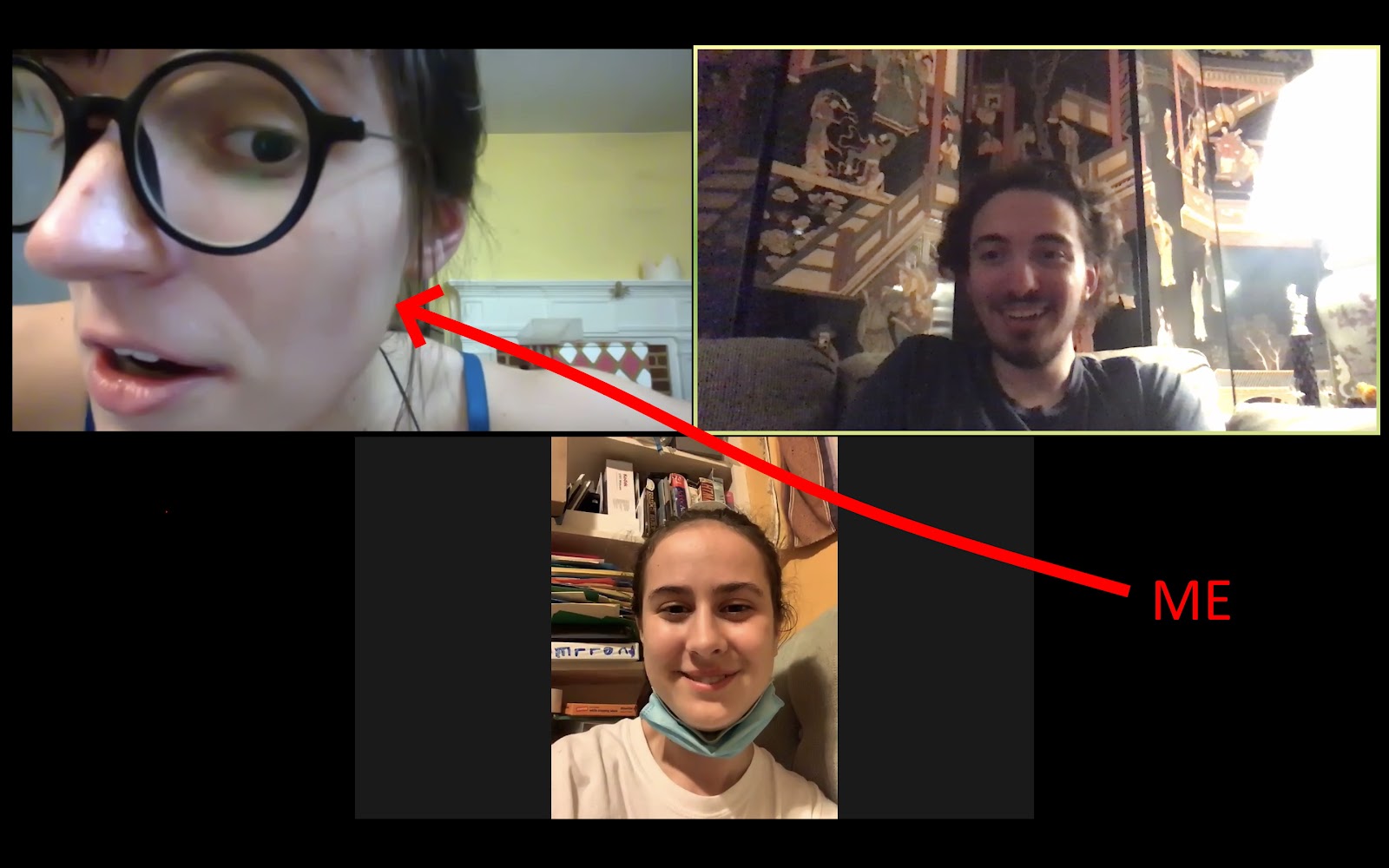
Hi, I’m Lia Wallace, and you may remember me from such previous blog posts as “Applied Theatrics” and “What I Learned on my Summer Vacation: An ASCTC 2019 Retrospective.”
I’m here to pass on some of the lessons I learned this summer at #SHXCamp 2020, the American Shakespeare Center’s digital version of the residential ASC Theatre Camp. Read on for tips, encouragement, and advice on replicating our successes while avoiding our mistakes.
1. Don’t pretend online is the same as in-person.
Instead, acknowledge and embrace the obstacles and opportunities provided by your new staging conditions.
“To be completely honest (and strongly influenced by discussions I’ve already had with my camper) I would need to see a completely novel approach to online learning that would make us interested in a virtual ASCTC experience. You guys have amazing content and staff, there is no doubt if anyone can pull this off, you can — but so far I’ve seen so many attempts fall flat in engaging people in a way that is anywhere near as powerful as the in-person experience.” – Parent response to pre-Camp survey
When it came time to pivot the residential ASC Theatre Camp into the digital #SHXCamp, I took a look at my list and crossed off everything made impossible by our socially distant reality:
Perform with Shakespeare’s staging conditions in the Blackfriars PlayhousePreview the college experience by living on the Mary Baldwin University campusWatch live performances by American Shakespeare Center professional troupes- Explore the infinite performance options available in early modern texts
- Spend three weeks together?
The tangible external trappings of the Playhouse or MBU’s campus are vital components of the residential Camp experience, but they would not survive digital transplantation, and pretending otherwise would get us nowhere. We had to work with whatever would survive, which turned out to be plenty — so long as we embraced our new staging conditions. For us, that meant acknowledging the reality of the Zoom box as our primary venue (see item #2, “Use The Device” for more on this) and crafting work that would work in that venue.
To do so, I freed directors Jack Read (Julius Caesar) and Lauren Carlton (All’s Well that Ends Well) from the regular restraints of a one-hour cut or indeed any sort of linear storytelling, and I threw nearly all of our normal “rules” out of the window in favor of one new uber rule: the show portfolios could be anything except for a straight-up “Zoom reading” of the play. Instead of using Shakespeare’s staging conditions to mount one-hour productions of early modern plays for live performance in the Blackfriars Playhouse, #SHXCampers would need to use the internet’s staging conditions to devise multimedia-enhanced explorations of Shakespeare’s text for compilation in a digital portfolio. Armed with these instructions, #SHXCampers got extraordinarily creative. Peruse the digital portfolios to see the fruits of their labors (click here for All’s Well, click here for Caesar).
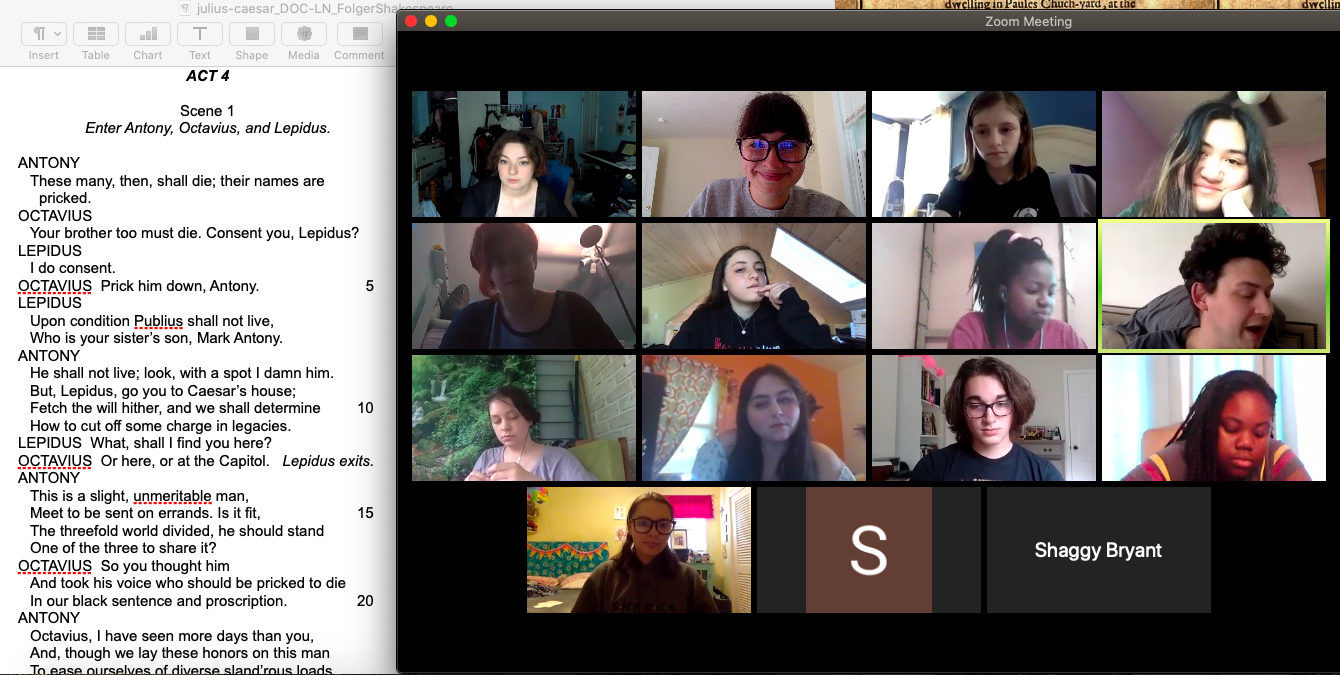
“This was a super unique experience and I think the Caesar team handled it super well. Our process was super collaborative and I know for a fact that my ideas were heard.” — #SHXCamper
“Oh my gosh. Being in All’s Well with Lauren was incredible!!! She was the best director ever. I loved how we all got to come up with ideas ourselves as well as execute her amazing ideas. The creative freedom she gave us definitely helped get more in touch with character!!” — #SHXCamper
This was hard. We love what we do, and we had a hard time letting it go lightly. ASCTC, like ASC in general, has always been context-driven. What we do (mount one-hour productions of early modern plays) depends heavily not only on why (for live performance) but also on where (in the Blackfriars Playhouse) we do it. Even though we followed the same process of embracing our context to arrive at a final collaborative product, the #SHXCamp digital portfolios look nothing like the normal ASCTC performances — nor should they. After all, online is not the same as in-person.
2. USE THE DEVICE!
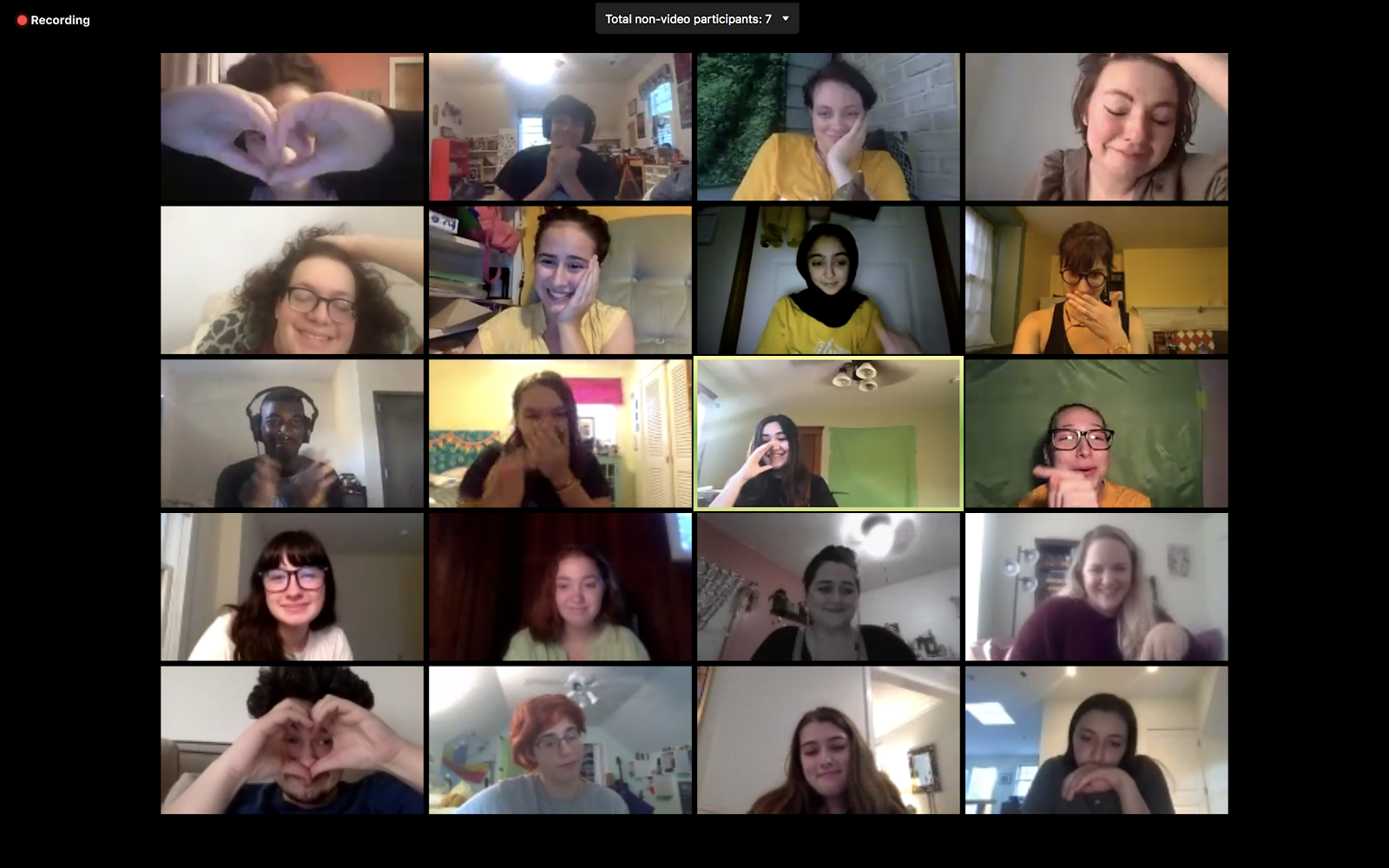
“I was surprised that I could make friends very effectively over Zoom!! I love everyone from camp so much.” — #SHXCamper
While I still spend a good chunk of each day lamenting what we can’t have on Zoom (eye contact, side conversations, ensemble work, unison vocal work, eye contact, eye contact, eye contact) what we can have on Zoom is nevertheless remarkable. Here are a few Zoom functions we used (or should have used) to great effect at #SHXCamp:
- Share screen
The digital equivalent of holding up a page for display or glancing (with permission) over your neighbor’s shoulder, screen sharing became second nature at #SHXCamp. Along with a simple view of the screen, Zoom makes it super easy for users to share more. You can send files through Zoom’s screen share function and write on a shared digital “white board” together (see item c. “Annotate” on this list for more about that). You can also share your computer audio — either by itself (perfect for playing music while still being able to see faces in gallery view; came in very handy for the Masquerade Ball and our many impromptu dance parties) or with a screen share (perfect for watching video clips together; came in very handy for Archive Movie Nights).
- Breakout rooms
The digital equivalent of dividing into smaller groups. Hosts can create, open, and assign meeting participants to breakout rooms at any time during a meeting. Co-hosts can float between breakout rooms, as well. I cannot imagine rehearsing any sort of ensemble piece without liberal use of the breakout room function for dividing up scene work and delegating to production team members. It’s easy to use, it significantly increases productivity by allowing you to work on more than one moment at a time, and it provides much-needed variety for participants (especially those who may thrive in smaller groups but be reluctant to engage in larger ones).
- Annotate

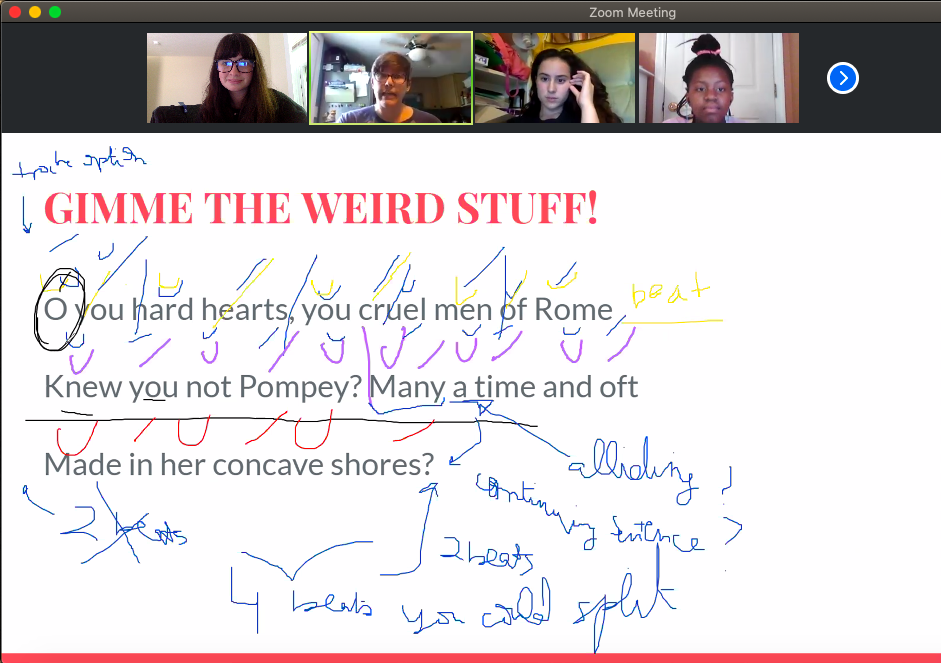
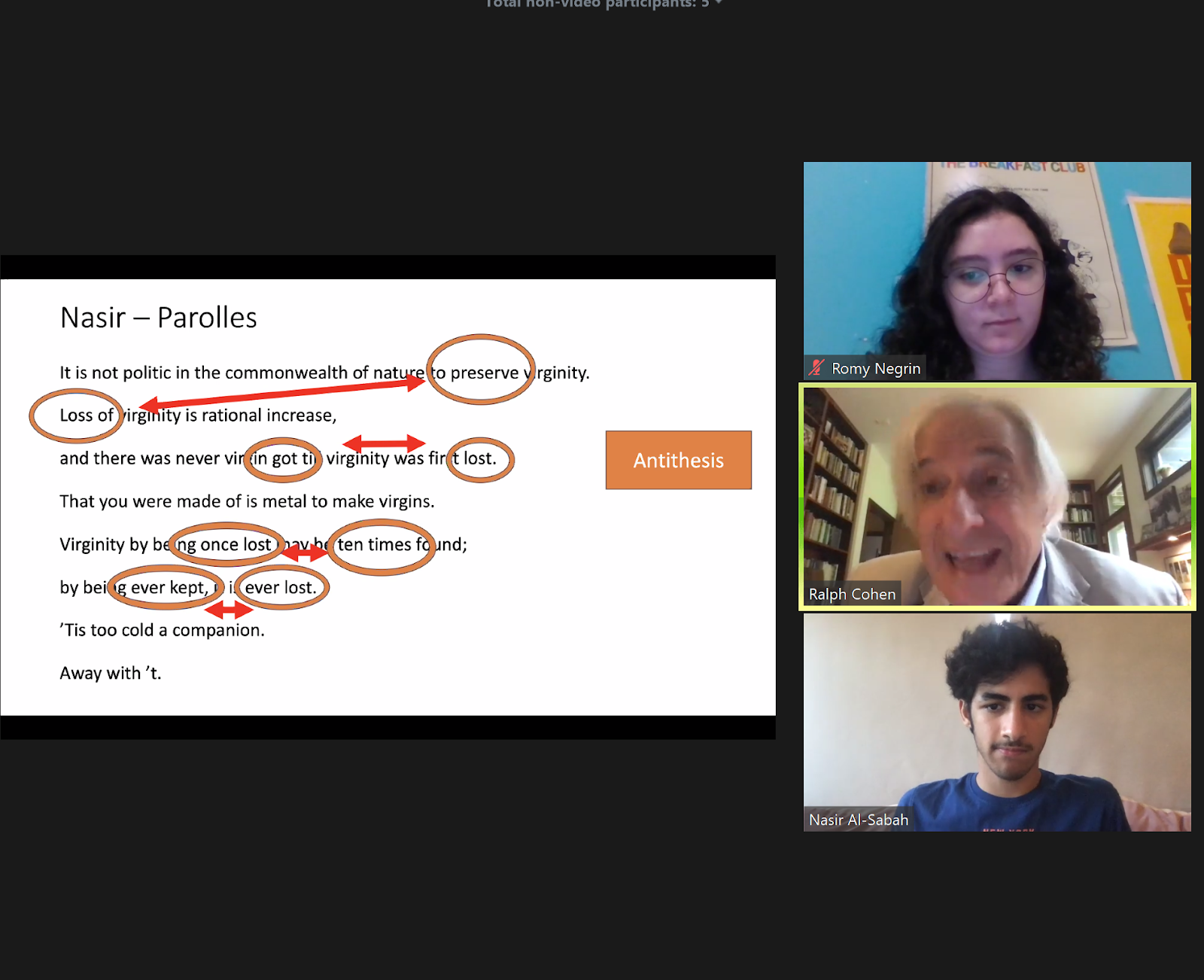
Hosts and meeting participants can use the “annotate” function to draw or write on a shared screen (or shared whiteboard). A simple way to engage students’ participation in workshops (especially since Zoom changed the default settings to automatically show the name of each annotater next to their contribution). We used this to mark up text in our rhetoric and scansion workshops, and also to doodle together between classes.
- Chat
“One of the big pluses of using Zoom is that you can private message people. When I can tell people are stressed out or they’re doing a big presentation or something, I normally drop them a “you can do it!” motivational message in their private Zoom messages! Many campers did this for me and the messages never failed to brighten my day.” – #SHXCamper
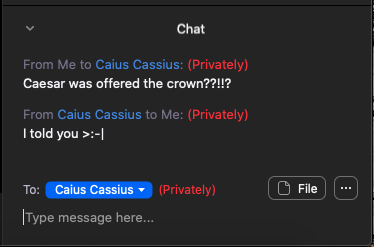
While I understand the gut reaction to stay away from chat features (we don’t encourage students to pass notes in class, after all) I want to encourage everyone to check their assumptions in this ridiculous time (and remember all the notes they passed in their own classes back in the day anyway). Connecting is hard when we are forcibly separate. Embrace anything that makes it easier. We set rules around the chat functions on each digital platform in different contexts (e.g. only use the Zoom chat for dramaturgy-related questions or comments during rehearsals and keep unrelated chatter to the appropriate Slack channel — read more about Slack in item #4), which helped keep distractions to a minimum while still encouraging campers to engage with the material together.
- Hide Self View
“Some days were a little harder but I could always turn off my camera and move around and feel better.” — #SHXCamper
Humans are not used to witnessing our own interactions, and anybody who’s sat across the table from a mirror knows how distracting it is to be forced to do so. We gave #SHXCampers the option of turning off their cameras as needed, which they universally appreciated, frequently used, and (probably) abused on occasion. While requiring cameras on is problematic (especially when it comes to issues of access and bandwidth), so was our solution of allowing them to be turned off at-will. Sometimes, we found ourselves speaking to a sea of black boxes, unsure of whether we were being understood or even heard, which was both frustrating and demoralizing. One happy medium exists in the “hide self view” option, which keeps your camera on but removes your video from your own personal Zoom display (so you aren’t staring at your own face) thereby cutting back on Zoom fatigue.
Once we stopped lamenting the loss of our in-person program and turned our attention to what we were able to do online, we found all sorts of tools waiting to be put to creative use. If you find yourself forced to teach virtually this year, don’t panic. Investigate your platform(s) thoroughly, and encourage your students to do the same. You may find more than you think.
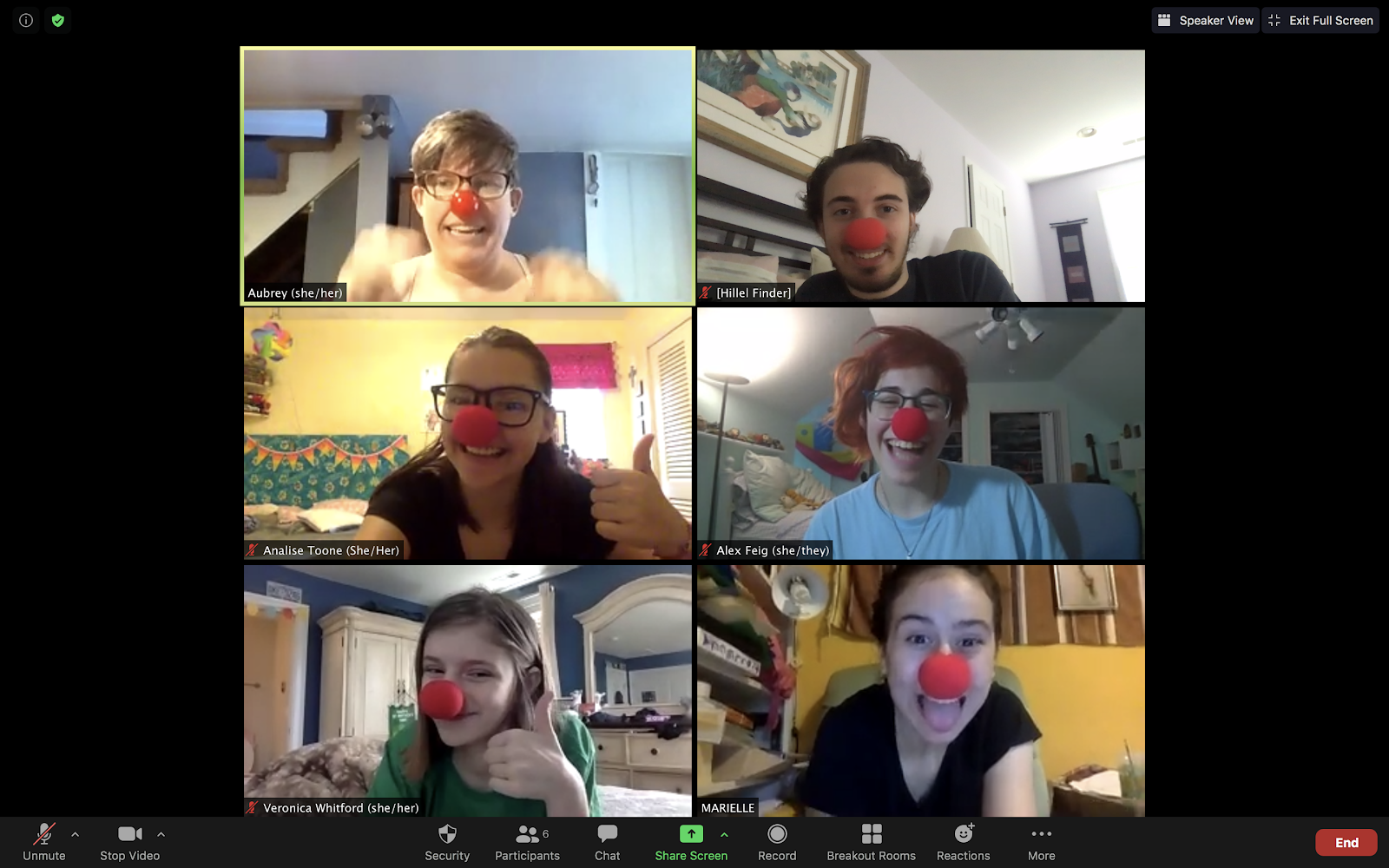
3. You will need more time to cover less material, and longer breaks to beat Zoom fatigue. Schedule accordingly.
“More breaks plz to cut some long zoom sessions. The zoom fatigue hits hard sometimes.” – #SHXCamper
Teaching over Zoom is different than teaching in person (see item #1 on this list). Not everything will take longer to do on Zoom, but a lot of things will — including the simple things many of us take for granted. For example, I used to be able to call on a student instantaneously with a simple visual scan and a social cue like pointing or eye contact, none of which is possible on Zoom. Instead, that instantaneous in-person action now takes long moments of verbal explication (instructing students to use the raise hand function, reminding them to unmute themselves, and dealing with the inevitable interruptions and miscommunications that arise from any confusion) to be virtually successful.
“I would have been ok with a longer day if it meant longer breaks in between things.” – #SHXCamper
In addition to the extra time it takes to do everything, our brains are scrambling to keep up with the constantly shifting modes of technological communication we now rely on but never evolved to use. Though advancements in technology outpaced biological evolution long ago, the struggle is still real and the cognition required for success is increasingly exhausting. There are ways to combat the resulting Zoom fatigue (see item 2e. “Hide Self View”) but the best remedy is thoughtful planning. Schedule brain breaks and take the time you need to be effective. Even if you end up covering less material in the short term, avoiding burnout will always get you further in the long run.
“I heard a lot of people talking about screen time and “zoom fatigue”, but that didn’t really affect me. I did school in the spring online from 9-2, so this really wasn’t that different — except that I was actually enjoying this, which made it much easier.” – #SHXCamper
4. Create a dedicated space for online socializing.
“I can’t believe how well you created a camp community experience. The first day online was exhausting and I wasn’t sure how all the hours online would translate into a 3 week experience, but it was amazing.” –#SHXCamp Parent
We realized back in March what many colleges and universities around the country began grappling with in July and August: when you lose the residential setting of your program, you lose the built-in immersion of the experience. The ASC Theatre Camp is about so much more than the content of its classes: it’s about the magic of meeting your people. That magic is not self-perpetuating. It needs time and tending, which it normally gets from the side conversations that happen while campers walk to classes together, the spontaneous board game tournaments in the dorm lounges, the late-night whispers between roommates, and all the other sorts of forced bonding that happen naturally between strangers thrown into a high-pressure, intensely emotional experience together. In order to make the magic happen online, we needed a way for campers to “hang out” during free time and connect during classes. Enter Slack.
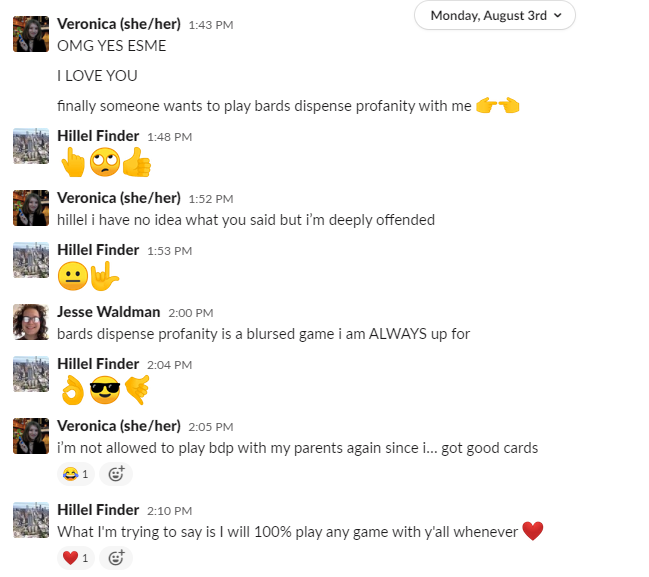
Slack is a “channel-based messaging system” designed for streamlining communications between coworkers, not a Learning Management System (LMS) designed for delivering content to students (like Canvas or Blackboard Collaborate). I do not work for Slack, and while I endorse the platform heartily, my point is not to convince you to buy it. But I cannot overstate the importance of having a unified, customizable, segmented communications platform for #SHXCamp alongside our Zoom rooms. Everybody had access to standard channels like “general” and “random” as well as #SHXCamp-specific custom channels like “tutorials and resources” (where we stored instructive files like workshop handouts and demo videos) and “antiracism” (where we compiled information about actively dismantling white supremacy). Specific groups within the #SHXCamp workspace could also access private channels for specific projects or conversations — each cast had its own private channel for discussions related to their digital portfolios, for example. In addition to the private and public chat channels, Slack also allows all members to send direct messages to anybody else in the workspace. These features gave us all the ability to quickly and easily connect with everyone from anywhere, and allowed the inside jokes and “had to be there” moments of camp to happen online.
“If I had to pick one thing [I’ll still remember 20 years from now] though, it’s definitely the friends I made. Because I can confidently say that I made 18 new friends in the middle of a pandemic, and that’s pretty darn cool.” — #SHXCamper
While it took us about a week to get the hang of it (not an insubstantial amount of time in a three-week program), the #SHXCamp Slack workspace became a thriving digital community so vibrant and effective that we decided to keep it forever. We’re creating a SHXSlack subscription benefit for all current and former ASC Theatre Campers (and Camp staff) who join the Epizeuxis Society of ASC donors, which will give them access to this exclusive bubble of Camp resources, events, and friends. We weren’t sure it would work, but it absolutely did — and now we can all keep Camp in our back pockets year-round.
5. We can do this. Together.
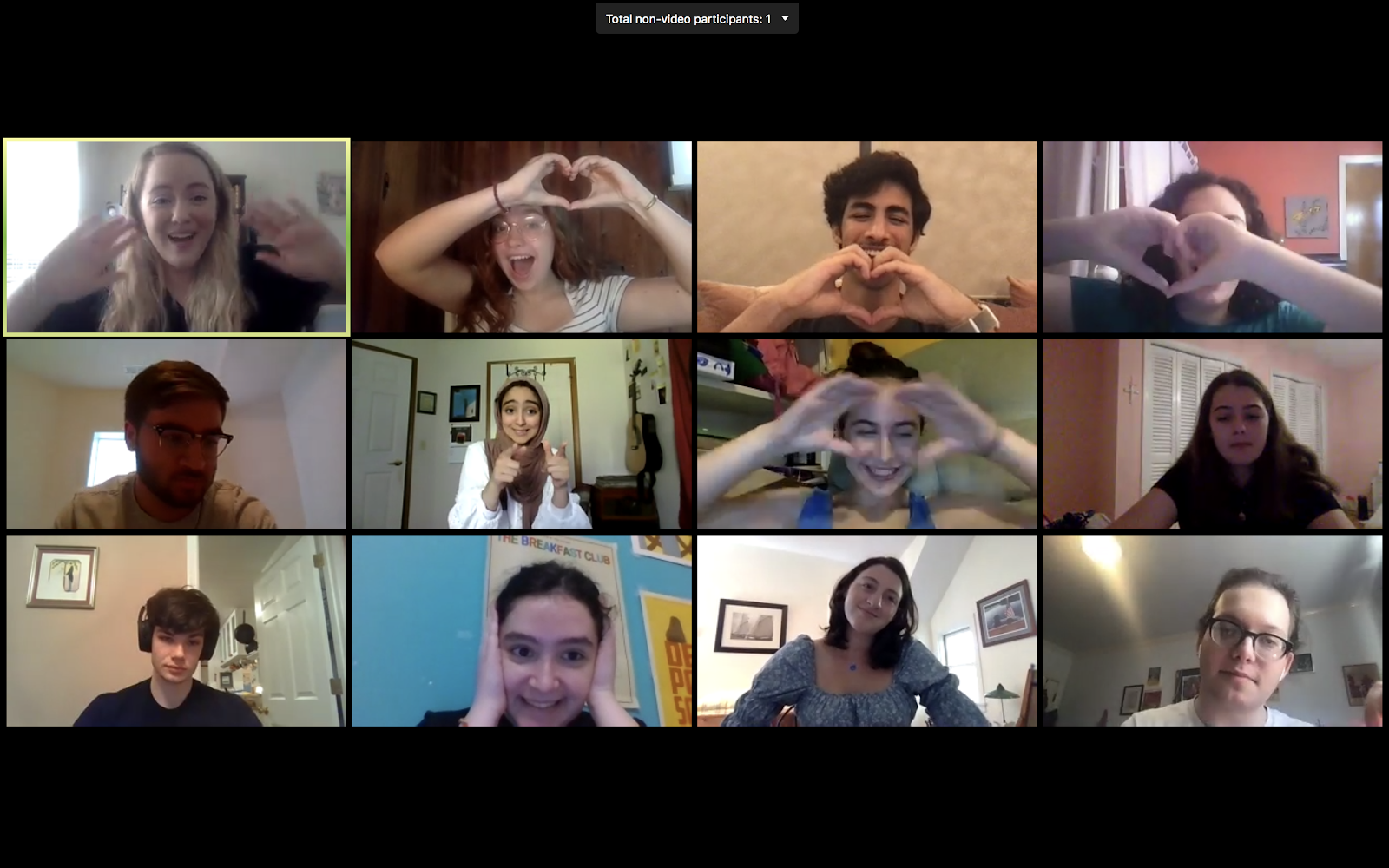
“Wow. I cannot say enough amazing things about this camp. I had no expectation that a true residential camp experience could be duplicated, but y’all have absolutely done it. [My camper] has lived and breathed #ShxCamp. It has inspired her beyond measure and surrounded her with a community of passionate people… something she didn’t even know she needed. It has most definitely impacted where she’s considering attending college and even her career plans. She’s already planning for next summer, and I NEVER imagined I would have her considering leaving home for a camp for 3 weeks. Every piece of this camp has been enjoyable for her, and you truly built a community. She’s going to have the same post-camp withdrawals she would if she’d been there in person. I’m mind-blown that a virtual experience could do that, and so thankful that you pivoted this camp to online.” — #SHXCamp Parent
Camp is magic. I learn that anew every summer, and 2020 was no exception. No matter where or how we do it, bringing together a bunch of enthusiastic young weirdos to explore and perform these centuries-old texts is magic. While I hope we never have to do a digital version of the ASC Theatre Camp again, knowing that we can do it is astonishing — and comforting. Weathering the uncertainties of our reality is difficult, and weathering them alone is nigh impossible. At the end of the day, we are what will get us all through this. Each other.
“Thank you so much for saving me from my darkest moments.” — #SHXCamper
Loneliness is corrosive and deadly. I cannot speak for anyone else, but I know I have felt lonelier in the last 5 months than I had in the previous 5 years. But for three weeks this summer, I never felt alone — because I never was. I had Camp with me.
The article above was authored by Lia Wallace, the Camp Director & College Prep Programs Manager of American Shakespeare Center Theatre Camp
The views and opinions expressed in the article above are those of the author and do not necessarily reflect the official policy or position of Camp Channel, Inc.
This article has been published to provide a first-hand account of one camp’s efforts and experience operating in the midst of Covid-19 during the summer of 2020; for the benefit of camp families, camp professionals, and the public at large. What may “work” for one camp might not for another. We believe safety is of paramount importance and urge those seeking to attend a camp in 2021 use due diligence and contact a camp directly about their systems, protocols, and outcomes. Originally published November 2020. This article reflects the experiences of one camp program during the Covid-19 pandemic and is preserved here as a first-hand account of virtual camp programming.

National Parks & Summer Camps: Essential Sanctuaries in the Modern World
August 25, 2016 marked the National Park Service’s Centennial, its 100th anniversary. Some might say the National Park system is our nation’s best idea, for a great number of reasons; some of the most poignant of which cannot be easily translated into mere words as a substitute for one’s presence amidst the sublime natural surroundings National Parks afford to those who cross their often frail boundaries into the unique ancient landscapes and habitats contained therein.
A long range historical perspective might reveal how the establishment of the National Park Service represented an effort to not only preserve our natural treasures, but to establish a foundation and cooperative framework to afford what might be considered the equivalent of large scale communal camp facilities for generations to engage and establish connections in perpetuity, amidst a contemporary world which often bombards us with a constant stream of trivial information and unending artificial stimuli.
Just as National Parks provide a physical venue for people to come together and perhaps form unseen yet enduring bonds with untrammeled natural landscapes and wildlife, summer camps might be thought of in a similar light in so far as providing a sanctuary from some of the more obtrusive aspects of modern life which might affect young people’s ability to better engage in meaningful social interaction and relationships with other individuals at a formative age.
As the sprawl of modern life has enveloped much of our natural surroundings, perhaps so too have technological advancements encumbered relationships among people, young and old. As a society and as individuals, we have generally drifted further and further into the individualized compartments of virtual worlds, electronic devices, and gadgetry; often at the expense of establishing and developing meaningful bonds with others in real time, in person.
Summer camps offer a forum for kids to establish real life relationships with one another; many of whom are experiencing similar issues in navigating the complicated waters of modern life. A camp environment may facilitate more thoughtful conversation and interaction with others in the moment versus the often caricatured reclusive behavior of reflexively retreating to one’s mobile device.
In a similar light as National Parks, some camps are able to provide a direct connection to our natural environment at various levels of immersion. Given the apparent decreasing scope of nature from our collective consciousness, the value of such a portal is immense; even as a simple reminder to all of us regarding our essence as human beings and what ultimately sustains us as creatures who inhabit the Earth.
Summer camps come in all shapes and sizes with respect to locale, facilities, and programming emphasis. Not all camps take place outdoors in a natural setting; however, even camps that utilize an indoor facility still offer a meaningful venue to congregate and interact with others in a positive fashion.
It is difficult to refute how technology has improved the human condition, offering tremendous breakthroughs and conveniences on a number of fronts. However, without the adoption and nourishment of constructs pertaining to real life bonds and relationships to people and the natural environment, technological improvements will invariably not live up to their potential to help people prosper; instead perhaps serving to perpetuate and amplify disconnects between people and nature alike.
Parallel origins: a shared history
The National Park Service and summer camps also share the same general historical era with respect to some of their early implementations. Theodore Roosevelt, the 26th President of the United States, extended federal protection to an unprecedented amount of land and wildlife during his terms in office from 1901 to 1909, including five National Parks, eighteen National Monuments, and the beginning of the United States Forest Service, totaling nearly 250 million acres. It was on the heels of the Roosevelt administration that the National Park Service formally sprang into existence in 1916.
During the same approximate time frame, the first traditional residential summer camps in the United States began to appear in the early part of the 20th century. Several of those original camps are still in operation today:
- Awosting (founded 1900)
- YMCA Camp Mason (founded 1900)
- Frost Valley YMCA (founded 1901)
- Surprise Lake Camp (founded 1902)
- Camp Highlands for Boys (founded 1904)
- Pok-O-MacCready Camps (founded 1905)
- YMCA Camp Lakewood (founded 1905)
- Camp O-AT-KA (founded 1906)
- YMCA Camp Copneconic (founded 1915)
- Fairview Lake YMCA Camps (founded 1915)
- Keystone Camp (founded 1916)
For well over 100 years, enrollment in summer camp programs has been strong and durable; helping to provide children growing up in the midst of unbelievable technological advancements the essential tools for establishing and improving interpersonal dynamics at a young age, holding great promise that such experiences can be imparted from one generation to the next in the years to come.
National Parks have similarly been a tremendous success, with an ever increasing number of park visitors from year to year. Even in spite of the potential detrimental impact to park infrastructure from high visitor usage, it is a heartening sign in a contemporary life filled with distractions to see our National Parks being visited in such great numbers, representing perhaps the heartbeat of a society trying to maintain its way in a quickly changing and fast paced world.
Cell Phone Policies at Summer Camps
Most summer camps have adopted a no cell phone policy of one form or another, providing rules that prohibit campers from possessing or using mobile devices during the session. Even camps in relatively remote locations deal with this question deliberately, and the majority have landed firmly on the side of restriction. Understanding your camp’s specific policy, and why it exists, is worth doing before your child arrives.
Why camps restrict cell phones
The reasoning behind no-phone policies is consistent across most camps, and it goes beyond simply limiting screen time. A cell phone represents a direct tether to home, and that connection, however comforting it seems from a parent’s perspective, can work against the very things camp is designed to provide. Learning to solve problems independently, navigating social situations without a digital escape hatch, and forming genuine in-person relationships with fellow campers all require some degree of disconnection from the outside world. A no-phone environment creates the conditions for that to happen.
Beyond the developmental argument, phones are expensive, easy to lose or damage in an outdoor setting, and their presence can create conflict among campers. A child absorbed in messaging home or scrolling a feed is not fully present in the experience around them, and that affects not just their own time at camp but the social fabric of the cabin and group as a whole.
What the policy typically covers
Camps that restrict cell phones generally confiscate devices at check-in and return them at the end of the session. Some camps extend the restriction to other personal electronics: tablets, gaming devices, smartwatches, and music players each have varying levels of restriction depending on the camp. It is worth asking specifically about any device your child is considering bringing, since blanket electronics policies and device-by-device policies differ significantly from camp to camp.
Staff policies are typically separate. Many camps require counselors and staff to keep phones off or out of sight during camper-facing hours, using them only during off-duty time. Campers are generally prohibited from using staff phones as well.
Staying in touch as a parent
For parents who want to maintain some contact during the session, camps that restrict phones typically offer alternatives. Letter writing remains the most universal option and has a genuine value for children in this era of digital communication. Many camps also provide email-to-camper services where messages are printed and delivered. Some publish photos to a password-protected website or app during the session so parents can see their child without direct communication disrupting the experience.
The impulse to circumvent a no-phone policy is understandable but worth resisting. Compliance with camp rules, including unpopular ones, models the same behavior camps are trying to teach campers themselves. Most children report, often to their own surprise, that the phone-free environment was one of the best parts of camp rather than a hardship.
When camps allow phones
Some camps do permit limited phone use, typically during designated free periods or for older campers. In these cases the policy governs when, where, and how long phones may be used, and those boundaries deserve the same respect as a full restriction policy. Understanding the specifics before camp begins prevents confusion on arrival and sets expectations for both the camper and the family.
Confirming the electronics policy is a standard part of any pre-camp conversation with a director. If it is not covered in the materials you have received, ask directly before your child arrives. Browse the Camp Channel summer camp directory to find and contact camps across the United States and compare programs for your child.
Camp Reunions and Off-Season Gatherings: What to Expect
Summer camp friendships do not have to end when the session does. Many camps, particularly residential overnight programs, organize reunions and off-season gatherings that bring campers together during the fall, winter, or spring months. These events serve a practical purpose for families evaluating whether to re-enroll, and they reflect something genuine about how seriously a camp takes its community beyond the summer calendar.
Why camps hold reunions
Residential camps are especially likely to host off-season reunions because of the nature of the experience they provide. Campers who spend six to eight weeks together as an extended community form bonds that are meaningfully different from school friendships, and those relationships benefit from a dedicated opportunity to reconnect. Day camp reunions are less universal but still common, particularly where campers may not share the same school and would not otherwise see each other during the off-season.
Reunions also serve a practical function for camps. An annual gathering reinforces the sense of belonging that motivates campers to return the following summer and gives prospective campers or families a firsthand look at the community they might be joining.
What reunions typically include
The format varies by camp, but reunions commonly include some combination of the following:
- A meal or social event such as an ice cream social or pizza gathering
- A photo slideshow or video from the most recent summer session
- Games, activities, and traditions carried over from camp
- Small prizes, mementos, or recognition of achievements from the summer
- Attendance by counselors who live near the reunion location
Some camps run an open house alongside the annual reunion, inviting prospective campers and families to attend alongside returning campers. This gives future enrollees a direct experience of the social dynamic that defines a particular camp community, which no brochure or website can fully replicate.
Geographic considerations for residential camps
Residential camps often draw campers from across the country or internationally, which means a single reunion location would exclude most of the community. Many camps address this by organizing multiple regional events in different cities, each hosted by local staff or alumni families. If your child attends a camp with a geographically distributed enrollment, ask whether there is a reunion near you rather than assuming there is only one event.
How to find out if your camp holds reunions
Not every camp holds formal off-season reunions, and those that do may not advertise them prominently on their website. The most direct approach is to contact the camp director or office and ask specifically whether any off-season gatherings are planned and how families are notified. Camps that do hold reunions will generally send details about date, location, and format to enrolled families as the event approaches.
If your child has not yet attended a camp and you are in the process of evaluating options, asking about reunion and off-season programming during a camp tour or director conversation is a useful signal. A camp that invests in maintaining its community outside of the summer session is demonstrating something meaningful about its values and the depth of its program. Browse the Camp Channel summer camp directory to find and contact camps in your area.
Emailing a Camper: How Camp Email Services Work
Letter writing has long been a core part of the residential camp experience, and it remains so today. In recent years, many camps have added one-way email services as a complement to traditional mail, allowing parents, family, and friends to send messages electronically that are then printed and distributed to campers during regular mail call. The format preserves the tangible experience of receiving mail while removing the logistical friction of postal delivery timelines.
How one-way camp email services work
The defining feature of most camp email services is that they are one-directional. Senders submit a message through a designated portal, email address, or third-party service. Camp staff receive the message, print it, and deliver it to the camper during the next scheduled mail call. Campers cannot reply via email, which is intentional: most traditional residential camps actively discourage electronic communication as a way of keeping campers present and engaged with the camp community rather than connected to home through a screen.
The specific setup varies significantly from camp to camp. Some camps use a dedicated email address for incoming messages. Others use a web-based portal where senders register an account and submit messages through a form linked from the camp’s website. Some systems require a pre-approval code issued to families at registration. Checking the camp’s website or contacting the office directly before the session begins is the most reliable way to understand exactly how the service works for your specific camp.
Fees, frequency limits, and cutoff times
Some camps charge a nominal fee per message to cover the costs of setting up and maintaining the service, paper, printing, and staff time. This is common and worth budgeting for if you plan to send messages regularly.
Camps may also set limits on how frequently messages can be sent, such as one per day, and establish cutoff times to ensure messages are included in the next mail call rather than delayed to the following one. Missing a cutoff time by even a few hours can mean a message does not reach your camper until the next scheduled delivery, which at some camps may be every other day rather than daily. Understanding the schedule before the session begins prevents disappointment.
Confidentiality
Printed emails pass through staff hands in the course of being received and delivered. They should not be treated as private correspondence in the way a sealed envelope might be. This is worth keeping in mind when deciding what to include in a message, particularly for anything sensitive or personal.
When email service is not available
Not all camps offer email services, and day camps and travel camps typically do not provide this type of communication since the program structure does not require it. If your camp does not offer an email option, traditional postal mail remains entirely viable. A handwritten letter with a familiar handwriting is often more meaningful to a camper than a printed email, and the anticipation of mail call is itself part of the camp experience that many campers remember for years.
To confirm whether a specific camp offers email services and how to use them, contact the camp director directly. Browse the Camp Channel summer camp directory to find residential programs across the United States and reach out to camps before the session begins.
Summer Camp Packing List: What to Bring, What to Leave Home, and What to Ask
Packing for summer camp is more involved than packing for a family vacation. Camps vary significantly in what they require, what they provide, and what they prohibit, which means the single most useful step before you pack anything is to get the specific packing list from the camp itself. Most camps publish a gear list on their website, and many will send one directly when you enroll.
Use the camp’s official packing list
Use the camp’s official packing list as your baseline. It will tell you how many changes of clothes are recommended, whether laundry service is available during the session, and whether the camp requires or sells branded apparel like t-shirts or sweatshirts as part of the program. Residential camps in particular often have specific guidance on quantities since campers may be on site for one to several weeks without access to additional supplies.
Items commonly prohibited
Food brought from home is one of the most frequently restricted items at residential camps. The reasons are practical: food safety, cross-contamination risks for campers with allergies, and wildlife attraction in outdoor settings all factor into this policy, and it tends to be enforced consistently regardless of what the item is. Electronics are another common restriction. Cell phones and handheld gaming devices are prohibited at many overnight camps as a deliberate program choice rather than an oversight. This restriction supports campers’ social engagement, independence, and focus on the program itself. For a fuller explanation of why camps restrict phones and what alternatives exist for staying in touch, see our post on cell phone policies at summer camps. Policies on digital cameras, e-readers, and similar devices vary, so ask the director directly about any specific item you are uncertain about.
Medications, allergies, and special needs
If your child takes any medications or has dietary restrictions, allergies, or other health considerations, make sure the camp director is aware before the session begins. This is not a detail to surface on arrival day. Most residential camps have medical staff on site who manage and dispense camper medications according to a specific intake protocol. Ask the camp how medications should be sent, labeled, and documented so there are no gaps when your child arrives. A director who handles this question thoroughly and specifically is giving you useful signal about how the program operates overall.
Gear the camp provides vs. what to bring
Some gear is the camper’s responsibility to bring: sleeping bags, flashlights, water bottles, and personal sports equipment like baseball gloves are common examples. Other equipment is supplied by the camp: balls, watercraft, tents, and shared activity gear typically fall into this category. The line between the two is not always obvious from a program description, so when in doubt, ask. Camp directors would rather answer the question in advance than have a camper arrive without something they need.
Labeling
Label everything with your child’s name before it leaves the house. In a cabin or bunk shared by eight to twelve kids with similar gear, unlabeled items become communal property within days. Clothing, sleeping bags, water bottles, flashlights, and toiletry bags all benefit from clear identification. A permanent marker works for most hard surfaces and equipment. Iron-on or adhesive fabric labels are more durable for clothing and worth the extra effort for a multi-week session. Some camps require labeling; most simply strongly recommend it after years of lost and found chaos at the end of each summer.
Letters and correspondence
Many camps either require or strongly encourage campers to write letters home. Pack a supply of paper, envelopes, stamps, and pens or pencils so your child is ready from the first day. For more on the role of letter writing at camp and why it matters more than it might seem in an era of instant messaging, see our post on the importance of letter writing to and from summer camp.
Browse the Camp Channel summer camp directory to find programs by type, location, and age range. Once you have enrolled, the camp’s own packing list is the definitive resource for everything your child will need, and the director is always the right person to ask when something on that list is unclear.
Letter Writing to and from Summer Camp: Why It Still Matters
In an era of instant digital communication, the handwritten letter holds a particular place in the camp experience that no electronic equivalent fully replaces. Many residential camps actively encourage letter writing as both a communication tool and a developmental one, and the tradition of mail call, where a counselor distributes letters to campers in their cabin, remains a meaningful daily ritual at camps across the country.
What letter writing offers that other communication cannot
Writing a letter requires a child to slow down, organize their thoughts, and express them in a sustained and deliberate way. That process serves a purpose beyond communication: it helps a child work through the experiences, emotions, and observations of camp life in a manner that is personal and reflective. A letter home about a first successful swim across the lake or a difficult moment with a cabin mate captures something that a quick email or photo cannot.
For families at home, letters from camp serve as a running record of the summer. Read in sequence at the end of the session, they document the arc of a child’s experience in a way that is genuinely irreplaceable. Many families keep camp letters for years.
What to send your child before they leave
Providing your child with adequate letter writing supplies before the session begins removes one practical barrier to writing. Basic supplies include:
- A pad of paper or stationery
- Pens or pencils
- Pre-addressed envelopes with your return address already filled in
- A sufficient supply of stamps for the duration of the session
Pre-addressing and pre-stamping envelopes for your child is worth the extra few minutes before departure. A camper who has to track down an envelope and figure out addressing is less likely to write than one who has everything ready to go. Some families also include a few self-addressed stamped envelopes so the child can write back without any logistical friction.
Writing to your child at camp
Letters sent to campers carry their own value. Mail call at many camps is a daily or near-daily event, and receiving a letter gives a camper a tangible connection to home and family during what can be an emotionally complex experience. News from home, messages from siblings, and notes from friends and extended family all contribute to a child feeling remembered and connected while away.
It is worth noting that not receiving a letter while others do is a real experience for some campers, and a meaningful one. Most camp counselors are attuned to this and provide support, but families who make the effort to write consistently give their child a more reliable anchor during the session.
Letters alongside digital communication
Some residential camps provide limited email or digital communication options alongside traditional mail. Where available, these tend to be one-directional services where messages are printed and delivered rather than allowing direct digital exchange. Letter writing and email-to-camp services complement each other rather than compete. For more on how digital communication options typically work at residential camps, see our guide to emailing a camper at camp.
Browse the Camp Channel summer camp directory to find residential programs across the United States. When reviewing camps, asking about their communication policies, including how mail is handled and whether email services are available, is a useful part of evaluating whether a program is the right fit.
Summer Camps And The Outdoors: Restorative Powers of Nature
At the Camp Channel’s main office in Ophir, Colorado, elevation 9,700 feet, summer arrives late and leaves early. An early June snowstorm is not uncommon, and one in May is closer to the rule than the exception. For residents of Ophir and the surrounding Telluride area, this is less a complaint than an orientation: the outdoors here is not a destination you drive to on weekends. It is the immediate environment, and learning to engage with it across all seasons shapes how you think about what nature actually provides.
That orientation informs how we think about summer camp.
Why outdoor time affects the mind differently than screen time
Environmental psychologists Rachel and Stephen Kaplan developed attention restoration theory to describe something most people have experienced without having a name for it: time spent in natural environments allows the directed, effortful attention we use for work and problem solving to recover, while the involuntary attention drawn by natural settings does the restorative work passively. You are not trying to think clearly. You are simply outside. The thinking improves anyway.
Research supports this at the population level as well. Author and journalist Richard Louv, whose writing on children and the natural world has influenced educators and pediatricians across the country, argues that children with limited exposure to natural environments show higher rates of attention difficulties, anxiety, and reduced capacity for independent problem solving. The pattern he describes is consistent with a broader body of research on the cognitive and emotional effects of time spent outdoors versus time spent in front of screens.
What outdoor summer camps provide that is genuinely scarce
For most children today, extended time outdoors without a screen is not a normal part of daily life. Summer camp, structured around outdoor settings, physical activity, and the deliberate absence of the devices that mediate most of childhood’s social interactions, is one of the few environments where that changes for an extended period.
Studies indicate that children attending outdoor-focused camps show measurable gains in problem solving, social engagement, and mood regulation. The specific benefits that research and camp practitioners consistently identify include improved capacity for independent problem solving, stronger peer relationships formed through shared physical experience, reduced anxiety, and a meaningful increase in the kind of unstructured creative play that over-scheduled daily life tends to crowd out. These are not incidental effects. They are what a well-run outdoor camp is designed to produce.
What distinguishes a genuinely outdoor-focused camp
Not every camp that describes itself as outdoor-focused delivers the same experience. The distinction worth making is between programs that happen to be located outside and programs intentionally structured around outdoor engagement. Families evaluating camps should ask: How much of the daily schedule takes place outdoors versus in indoor facilities? Is unstructured outdoor time built into the program, or is every hour directed by staff? How does the camp approach electronics during the session, and is the policy enforced or advisory? Does environmental awareness run through the program as a whole, or is it confined to a single activity period?
The answers reveal whether a camp treats the outdoor setting as incidental backdrop or as the actual point of the program.
The range of outdoor programming available
The variety of outdoor camp programming across the current landscape is considerable. Programs broadly fall into three categories:
- Wilderness and nature camps, which offer the most direct and immersive outdoor experience with an explicit focus on natural environment engagement
- Specialty camps built around outdoor pursuits including sailing, rock climbing, horseback riding, whitewater kayaking, and wilderness backpacking, which provide structured skill development within natural settings
- Arts, athletic, and academic camps situated in outdoor environments, where the restorative effect of natural settings is present whether or not nature is explicitly the program focus
For children who have spent the school year heavily scheduled and screen-saturated, any of these formats can provide meaningful restoration. The degree to which a camp is intentional about it determines how much.
Browse the Camp Channel summer camp directory to find outdoor and nature-focused programs across the United States, searchable by program type, location, and age range. For related reading, see our posts on cell phone policies at summer camps and why the right camp makes a difference.


