Summer Camp Guides
Camp Directors: Keep Your Camp Channel Listing Current
Camp Types and Programs
Camp Directors: Keep Your Camp Channel Listing Current
Families searching for summer camps on Camp Channel rely on listing information to make enrollment decisions. Directors who keep their listings current with accurate session dates, pricing, and program details are consistently better positioned to connect with prospective campers. Updates can be made at any time, and reviewing your listing after each summer season ends and again before the next one begins is a good habit to establish.
Update your listing now
Take a moment to review and update the following:
- Session dates for the upcoming summer
- Rates and tuition information
- Changes in camp programming or activity offerings
- New facilities or infrastructure
- Virtual or online programming options
- Photos and videos
Upgrade your listing to add photos / media
Free listings provide basic directory presence and inquiry forms. Upgrading adds photos, videos, and richer content that gives families a stronger visual impression of your program:
- Basic Listing: $49/year – adds photos and enhanced content
- Full Hyperlink Listing: $149/year – adds photos, video, a direct link to your website, and maximum visibility in search results
View listing options and upgrade here.
Not yet listed on Camp Channel?
If your camp is not yet in the directory, adding a listing connects you with families actively searching for programs like yours across day camps, overnight camps, specialty programs, and special needs camps. Visit the Camp Channel directors page to get started.
A note for families
If you are searching for a camp for the upcoming summer, note that some camps are still in the process of updating their listings. Reaching out directly to any camp that interests you is always the best way to confirm current session dates, pricing, and availability.
Bringing the Magic Online: a #SHXCamp 2020 Retrospective
The ASC Theatre Camp (ASCTC) is an immersive, residential theatre intensive where students ages 13-19 get to:
- Perform with Shakespeare’s staging conditions in the Blackfriars Playhouse
- Preview the college experience by living on the Mary Baldwin University campus
- Watch live performances by American Shakespeare Center professional troupes
- Explore the infinite performance options available in early modern texts
- Spend three weeks together
In the midst of the current global pandemic, how could any of that be possible?
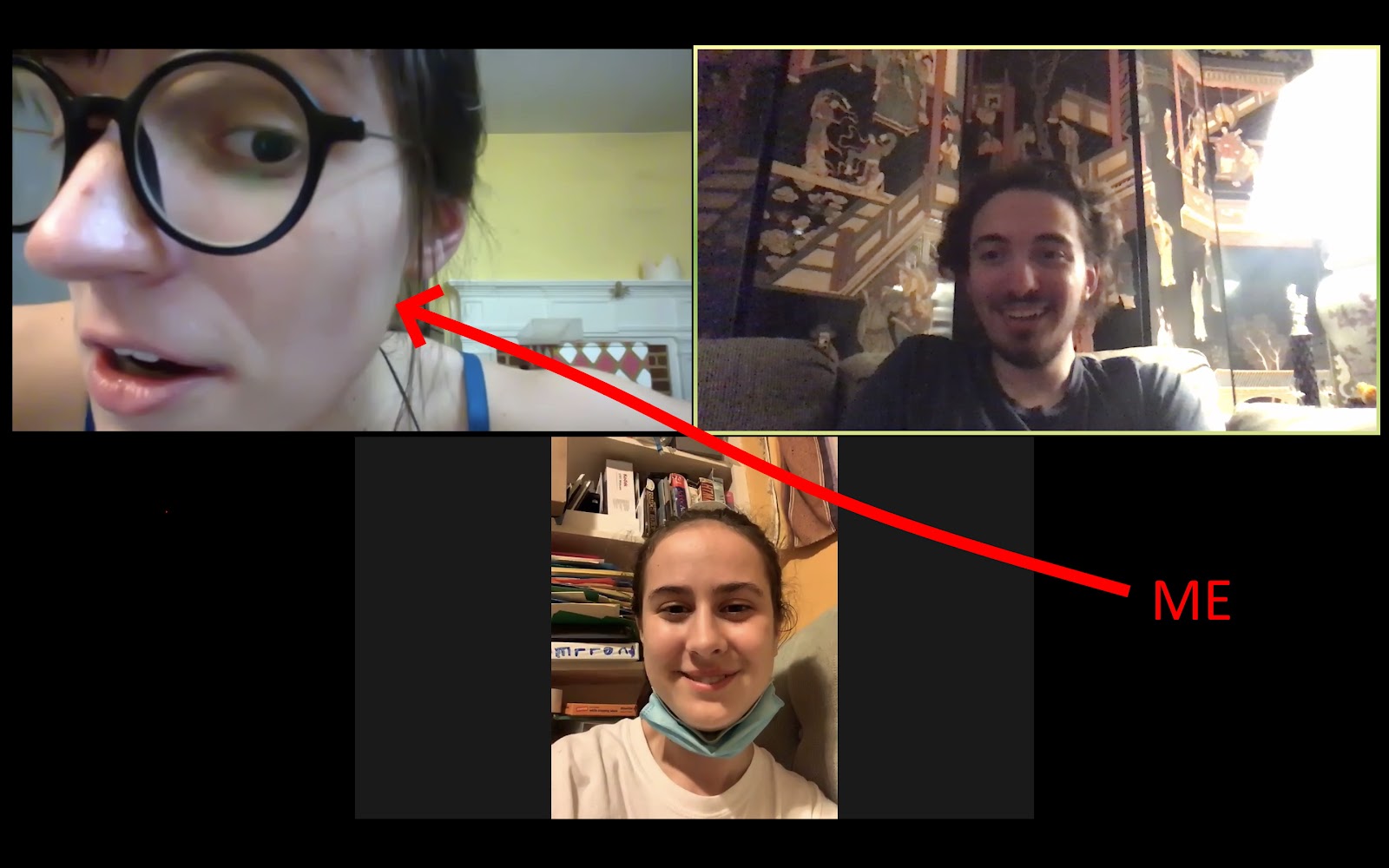
Hi, I’m Lia Wallace, and you may remember me from such previous blog posts as “Applied Theatrics” and “What I Learned on my Summer Vacation: An ASCTC 2019 Retrospective.”
I’m here to pass on some of the lessons I learned this summer at #SHXCamp 2020, the American Shakespeare Center’s digital version of the residential ASC Theatre Camp. Read on for tips, encouragement, and advice on replicating our successes while avoiding our mistakes.
1. Don’t pretend online is the same as in-person.
Instead, acknowledge and embrace the obstacles and opportunities provided by your new staging conditions.
“To be completely honest (and strongly influenced by discussions I’ve already had with my camper) I would need to see a completely novel approach to online learning that would make us interested in a virtual ASCTC experience. You guys have amazing content and staff, there is no doubt if anyone can pull this off, you can — but so far I’ve seen so many attempts fall flat in engaging people in a way that is anywhere near as powerful as the in-person experience.” – Parent response to pre-Camp survey
When it came time to pivot the residential ASC Theatre Camp into the digital #SHXCamp, I took a look at my list and crossed off everything made impossible by our socially distant reality:
Perform with Shakespeare’s staging conditions in the Blackfriars PlayhousePreview the college experience by living on the Mary Baldwin University campusWatch live performances by American Shakespeare Center professional troupes- Explore the infinite performance options available in early modern texts
- Spend three weeks together?
The tangible external trappings of the Playhouse or MBU’s campus are vital components of the residential Camp experience, but they would not survive digital transplantation, and pretending otherwise would get us nowhere. We had to work with whatever would survive, which turned out to be plenty — so long as we embraced our new staging conditions. For us, that meant acknowledging the reality of the Zoom box as our primary venue (see item #2, “Use The Device” for more on this) and crafting work that would work in that venue.
To do so, I freed directors Jack Read (Julius Caesar) and Lauren Carlton (All’s Well that Ends Well) from the regular restraints of a one-hour cut or indeed any sort of linear storytelling, and I threw nearly all of our normal “rules” out of the window in favor of one new uber rule: the show portfolios could be anything except for a straight-up “Zoom reading” of the play. Instead of using Shakespeare’s staging conditions to mount one-hour productions of early modern plays for live performance in the Blackfriars Playhouse, #SHXCampers would need to use the internet’s staging conditions to devise multimedia-enhanced explorations of Shakespeare’s text for compilation in a digital portfolio. Armed with these instructions, #SHXCampers got extraordinarily creative. Peruse the digital portfolios to see the fruits of their labors (click here for All’s Well, click here for Caesar).
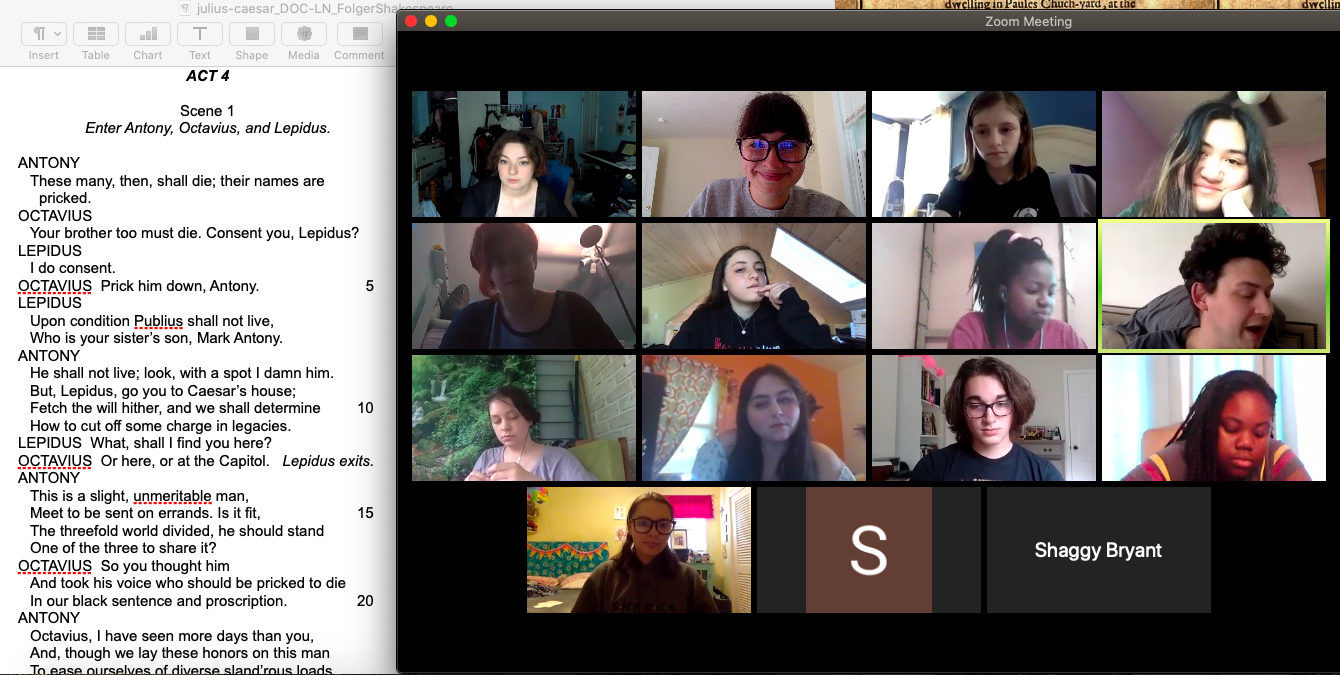
“This was a super unique experience and I think the Caesar team handled it super well. Our process was super collaborative and I know for a fact that my ideas were heard.” — #SHXCamper
“Oh my gosh. Being in All’s Well with Lauren was incredible!!! She was the best director ever. I loved how we all got to come up with ideas ourselves as well as execute her amazing ideas. The creative freedom she gave us definitely helped get more in touch with character!!” — #SHXCamper
This was hard. We love what we do, and we had a hard time letting it go lightly. ASCTC, like ASC in general, has always been context-driven. What we do (mount one-hour productions of early modern plays) depends heavily not only on why (for live performance) but also on where (in the Blackfriars Playhouse) we do it. Even though we followed the same process of embracing our context to arrive at a final collaborative product, the #SHXCamp digital portfolios look nothing like the normal ASCTC performances — nor should they. After all, online is not the same as in-person.
2. USE THE DEVICE!
“I was surprised that I could make friends very effectively over Zoom!! I love everyone from camp so much.” — #SHXCamper
While I still spend a good chunk of each day lamenting what we can’t have on Zoom (eye contact, side conversations, ensemble work, unison vocal work, eye contact, eye contact, eye contact) what we can have on Zoom is nevertheless remarkable. Here are a few Zoom functions we used (or should have used) to great effect at #SHXCamp:
- Share screen
The digital equivalent of holding up a page for display or glancing (with permission) over your neighbor’s shoulder, screen sharing became second nature at #SHXCamp. Along with a simple view of the screen, Zoom makes it super easy for users to share more. You can send files through Zoom’s screen share function and write on a shared digital “white board” together (see item c. “Annotate” on this list for more about that). You can also share your computer audio — either by itself (perfect for playing music while still being able to see faces in gallery view; came in very handy for the Masquerade Ball and our many impromptu dance parties) or with a screen share (perfect for watching video clips together; came in very handy for Archive Movie Nights).
- Breakout rooms
The digital equivalent of dividing into smaller groups. Hosts can create, open, and assign meeting participants to breakout rooms at any time during a meeting. Co-hosts can float between breakout rooms, as well. I cannot imagine rehearsing any sort of ensemble piece without liberal use of the breakout room function for dividing up scene work and delegating to production team members. It’s easy to use, it significantly increases productivity by allowing you to work on more than one moment at a time, and it provides much-needed variety for participants (especially those who may thrive in smaller groups but be reluctant to engage in larger ones).
- Annotate
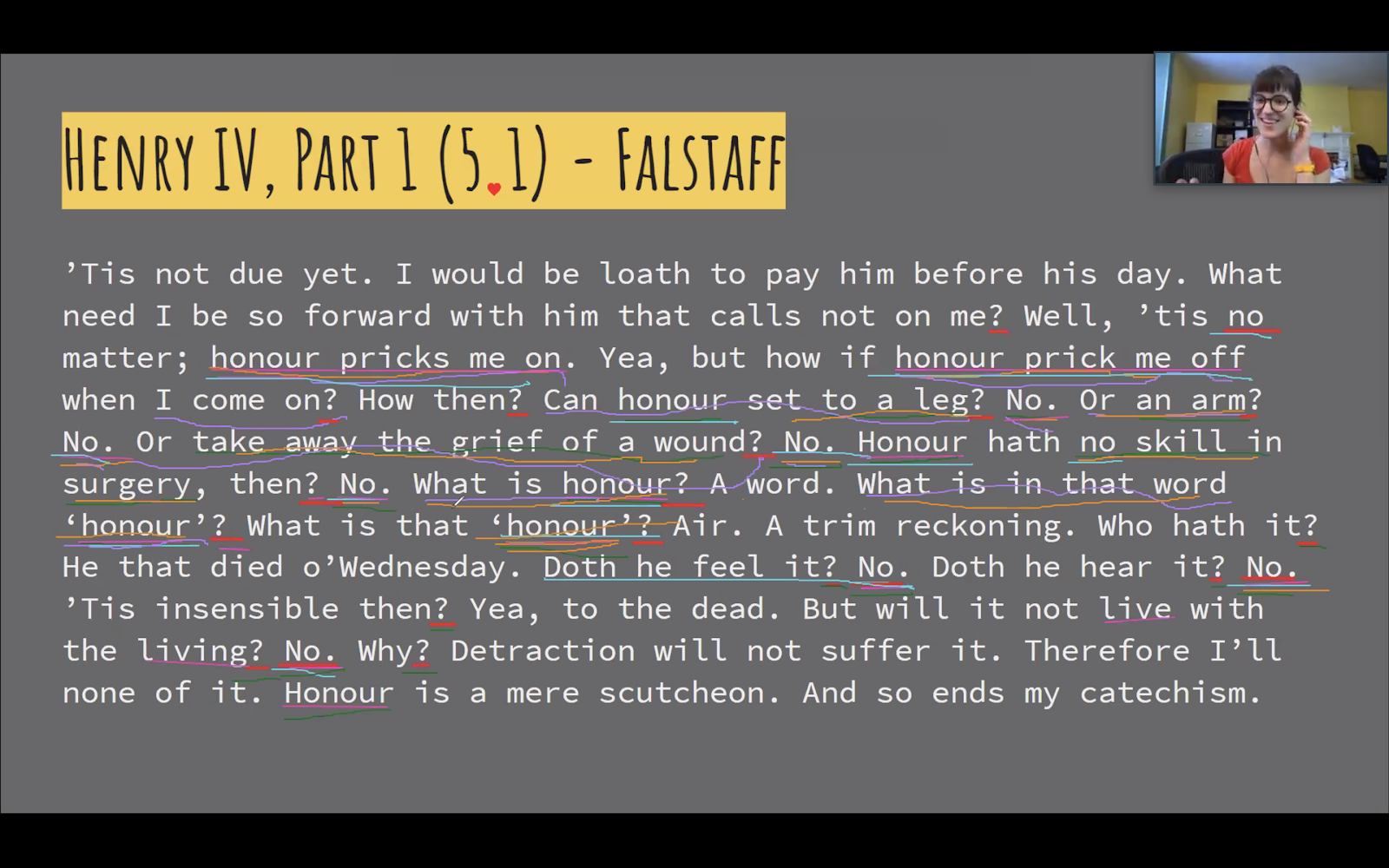
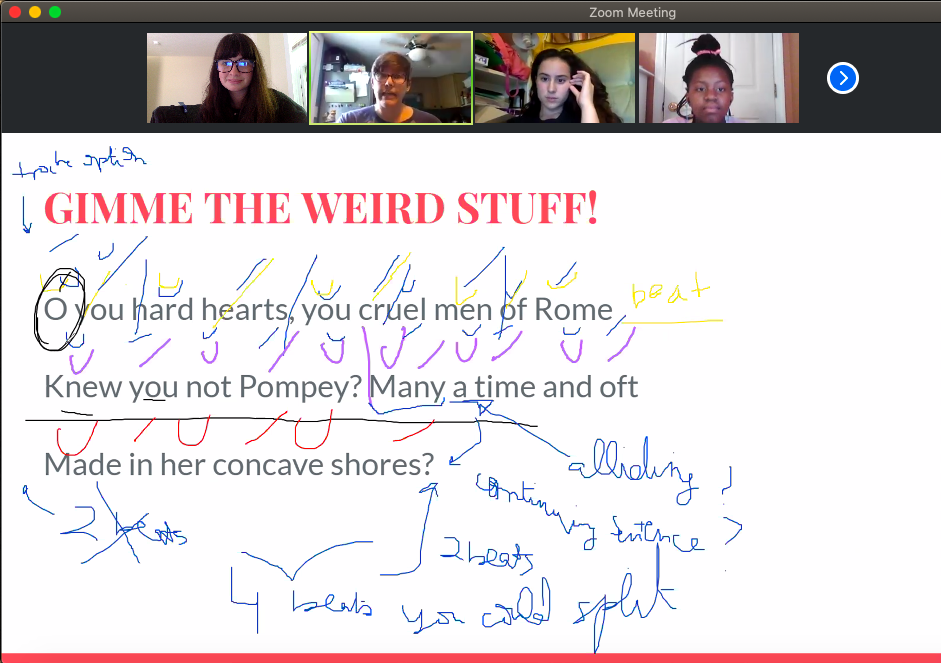
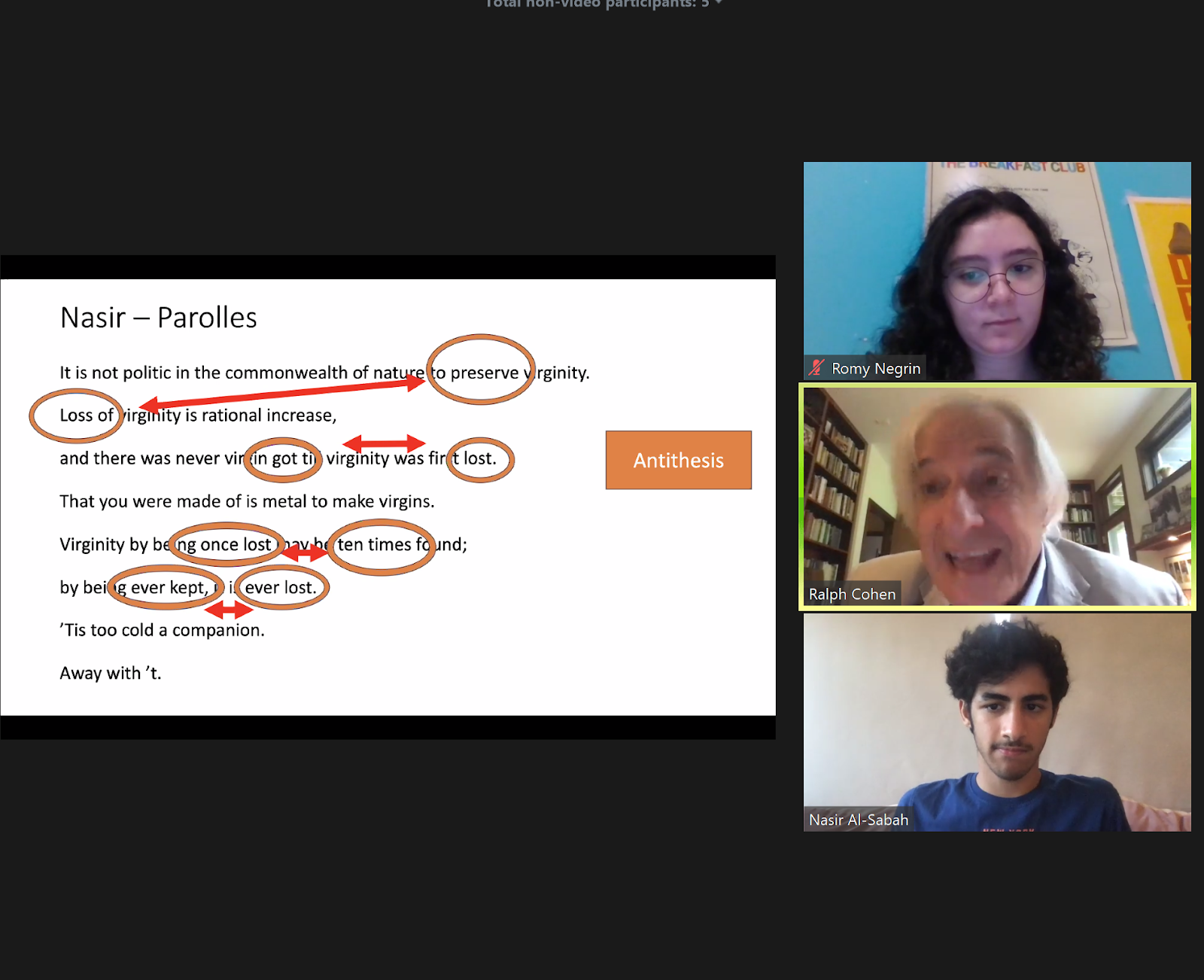
Hosts and meeting participants can use the “annotate” function to draw or write on a shared screen (or shared whiteboard). A simple way to engage students’ participation in workshops (especially since Zoom changed the default settings to automatically show the name of each annotater next to their contribution). We used this to mark up text in our rhetoric and scansion workshops, and also to doodle together between classes.
- Chat
“One of the big pluses of using Zoom is that you can private message people. When I can tell people are stressed out or they’re doing a big presentation or something, I normally drop them a “you can do it!” motivational message in their private Zoom messages! Many campers did this for me and the messages never failed to brighten my day.” – #SHXCamper
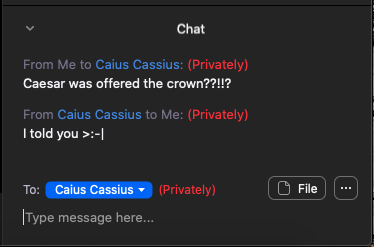
While I understand the gut reaction to stay away from chat features (we don’t encourage students to pass notes in class, after all) I want to encourage everyone to check their assumptions in this ridiculous time (and remember all the notes they passed in their own classes back in the day anyway). Connecting is hard when we are forcibly separate. Embrace anything that makes it easier. We set rules around the chat functions on each digital platform in different contexts (e.g. only use the Zoom chat for dramaturgy-related questions or comments during rehearsals and keep unrelated chatter to the appropriate Slack channel — read more about Slack in item #4), which helped keep distractions to a minimum while still encouraging campers to engage with the material together.
- Hide Self View
“Some days were a little harder but I could always turn off my camera and move around and feel better.” — #SHXCamper
Humans are not used to witnessing our own interactions, and anybody who’s sat across the table from a mirror knows how distracting it is to be forced to do so. We gave #SHXCampers the option of turning off their cameras as needed, which they universally appreciated, frequently used, and (probably) abused on occasion. While requiring cameras on is problematic (especially when it comes to issues of access and bandwidth), so was our solution of allowing them to be turned off at-will. Sometimes, we found ourselves speaking to a sea of black boxes, unsure of whether we were being understood or even heard, which was both frustrating and demoralizing. One happy medium exists in the “hide self view” option, which keeps your camera on but removes your video from your own personal Zoom display (so you aren’t staring at your own face) thereby cutting back on Zoom fatigue.
Once we stopped lamenting the loss of our in-person program and turned our attention to what we were able to do online, we found all sorts of tools waiting to be put to creative use. If you find yourself forced to teach virtually this year, don’t panic. Investigate your platform(s) thoroughly, and encourage your students to do the same. You may find more than you think.
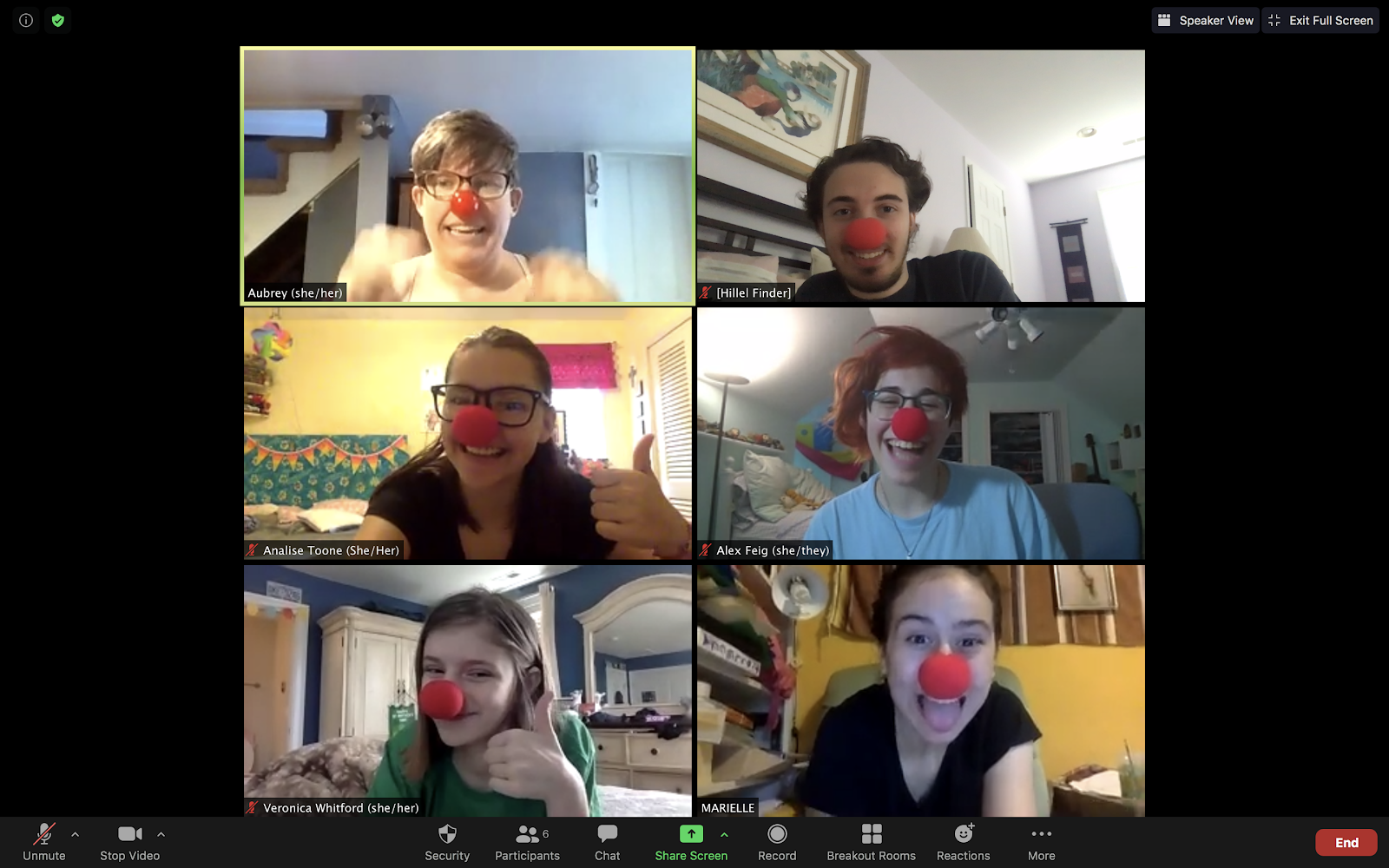
3. You will need more time to cover less material, and longer breaks to beat Zoom fatigue. Schedule accordingly.
“More breaks plz to cut some long zoom sessions. The zoom fatigue hits hard sometimes.” – #SHXCamper
Teaching over Zoom is different than teaching in person (see item #1 on this list). Not everything will take longer to do on Zoom, but a lot of things will — including the simple things many of us take for granted. For example, I used to be able to call on a student instantaneously with a simple visual scan and a social cue like pointing or eye contact, none of which is possible on Zoom. Instead, that instantaneous in-person action now takes long moments of verbal explication (instructing students to use the raise hand function, reminding them to unmute themselves, and dealing with the inevitable interruptions and miscommunications that arise from any confusion) to be virtually successful.
“I would have been ok with a longer day if it meant longer breaks in between things.” – #SHXCamper
In addition to the extra time it takes to do everything, our brains are scrambling to keep up with the constantly shifting modes of technological communication we now rely on but never evolved to use. Though advancements in technology outpaced biological evolution long ago, the struggle is still real and the cognition required for success is increasingly exhausting. There are ways to combat the resulting Zoom fatigue (see item 2e. “Hide Self View”) but the best remedy is thoughtful planning. Schedule brain breaks and take the time you need to be effective. Even if you end up covering less material in the short term, avoiding burnout will always get you further in the long run.
“I heard a lot of people talking about screen time and “zoom fatigue”, but that didn’t really affect me. I did school in the spring online from 9-2, so this really wasn’t that different — except that I was actually enjoying this, which made it much easier.” – #SHXCamper
4. Create a dedicated space for online socializing.
“I can’t believe how well you created a camp community experience. The first day online was exhausting and I wasn’t sure how all the hours online would translate into a 3 week experience, but it was amazing.” –#SHXCamp Parent
We realized back in March what many colleges and universities around the country began grappling with in July and August: when you lose the residential setting of your program, you lose the built-in immersion of the experience. The ASC Theatre Camp is about so much more than the content of its classes: it’s about the magic of meeting your people. That magic is not self-perpetuating. It needs time and tending, which it normally gets from the side conversations that happen while campers walk to classes together, the spontaneous board game tournaments in the dorm lounges, the late-night whispers between roommates, and all the other sorts of forced bonding that happen naturally between strangers thrown into a high-pressure, intensely emotional experience together. In order to make the magic happen online, we needed a way for campers to “hang out” during free time and connect during classes. Enter Slack.
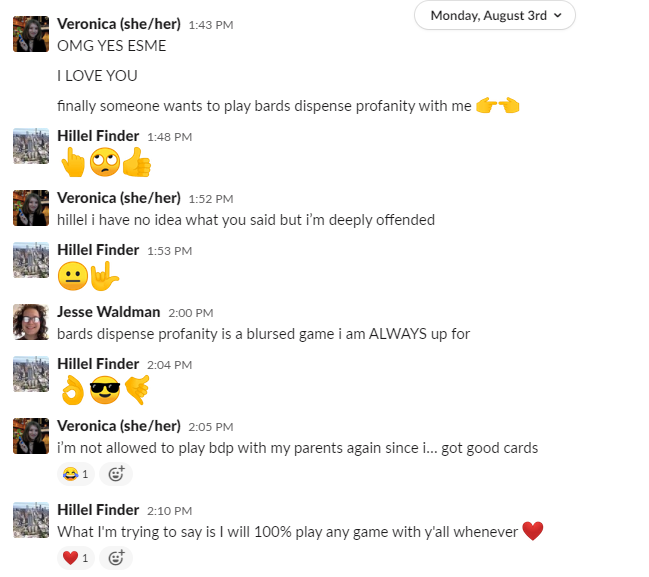
Slack is a “channel-based messaging system” designed for streamlining communications between coworkers, not a Learning Management System (LMS) designed for delivering content to students (like Canvas or Blackboard Collaborate). I do not work for Slack, and while I endorse the platform heartily, my point is not to convince you to buy it. But I cannot overstate the importance of having a unified, customizable, segmented communications platform for #SHXCamp alongside our Zoom rooms. Everybody had access to standard channels like “general” and “random” as well as #SHXCamp-specific custom channels like “tutorials and resources” (where we stored instructive files like workshop handouts and demo videos) and “antiracism” (where we compiled information about actively dismantling white supremacy). Specific groups within the #SHXCamp workspace could also access private channels for specific projects or conversations — each cast had its own private channel for discussions related to their digital portfolios, for example. In addition to the private and public chat channels, Slack also allows all members to send direct messages to anybody else in the workspace. These features gave us all the ability to quickly and easily connect with everyone from anywhere, and allowed the inside jokes and “had to be there” moments of camp to happen online.
“If I had to pick one thing [I’ll still remember 20 years from now] though, it’s definitely the friends I made. Because I can confidently say that I made 18 new friends in the middle of a pandemic, and that’s pretty darn cool.” — #SHXCamper
While it took us about a week to get the hang of it (not an insubstantial amount of time in a three-week program), the #SHXCamp Slack workspace became a thriving digital community so vibrant and effective that we decided to keep it forever. We’re creating a SHXSlack subscription benefit for all current and former ASC Theatre Campers (and Camp staff) who join the Epizeuxis Society of ASC donors, which will give them access to this exclusive bubble of Camp resources, events, and friends. We weren’t sure it would work, but it absolutely did — and now we can all keep Camp in our back pockets year-round.
5. We can do this. Together.
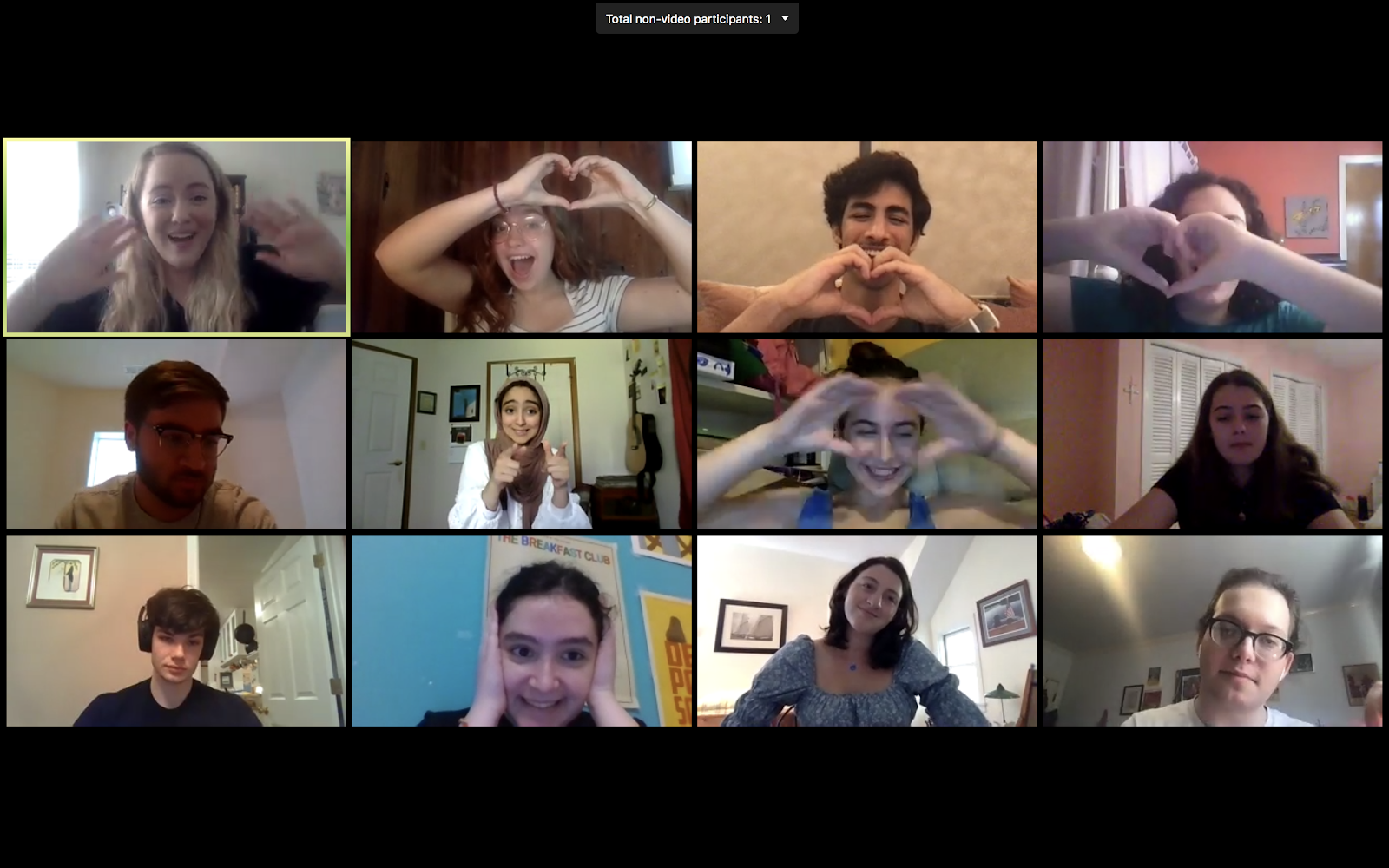
“Wow. I cannot say enough amazing things about this camp. I had no expectation that a true residential camp experience could be duplicated, but y’all have absolutely done it. [My camper] has lived and breathed #ShxCamp. It has inspired her beyond measure and surrounded her with a community of passionate people… something she didn’t even know she needed. It has most definitely impacted where she’s considering attending college and even her career plans. She’s already planning for next summer, and I NEVER imagined I would have her considering leaving home for a camp for 3 weeks. Every piece of this camp has been enjoyable for her, and you truly built a community. She’s going to have the same post-camp withdrawals she would if she’d been there in person. I’m mind-blown that a virtual experience could do that, and so thankful that you pivoted this camp to online.” — #SHXCamp Parent
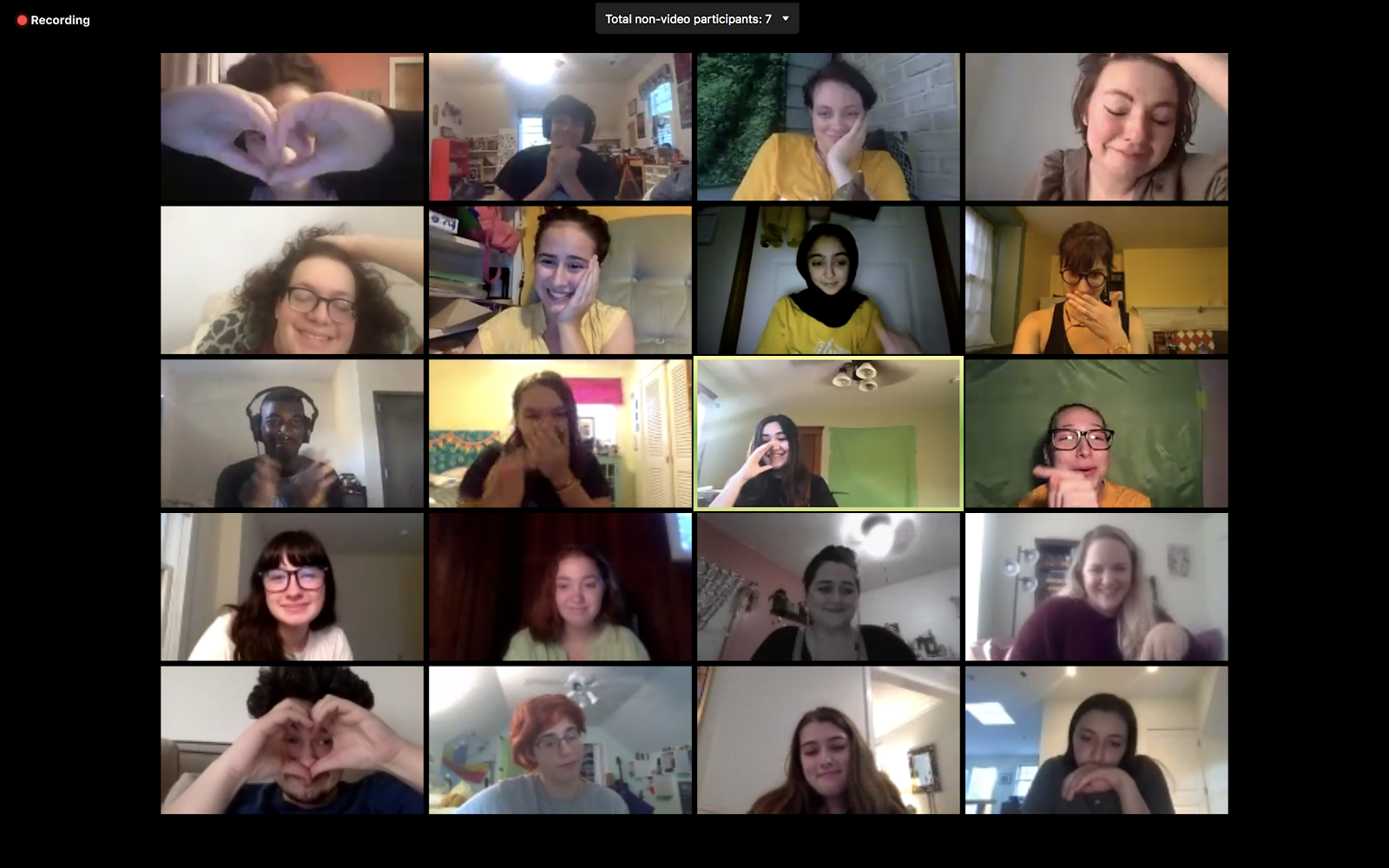
Camp is magic. I learn that anew every summer, and 2020 was no exception. No matter where or how we do it, bringing together a bunch of enthusiastic young weirdos to explore and perform these centuries-old texts is magic. While I hope we never have to do a digital version of the ASC Theatre Camp again, knowing that we can do it is astonishing — and comforting. Weathering the uncertainties of our reality is difficult, and weathering them alone is nigh impossible. At the end of the day, we are what will get us all through this. Each other.
“Thank you so much for saving me from my darkest moments.” — #SHXCamper
Loneliness is corrosive and deadly. I cannot speak for anyone else, but I know I have felt lonelier in the last 5 months than I had in the previous 5 years. But for three weeks this summer, I never felt alone — because I never was. I had Camp with me.
The article above was authored by Lia Wallace, the Camp Director & College Prep Programs Manager of American Shakespeare Center Theatre Camp
The views and opinions expressed in the article above are those of the author and do not necessarily reflect the official policy or position of Camp Channel, Inc.
This article has been published to provide a first-hand account of one camp’s efforts and experience operating in the midst of Covid-19 during the summer of 2020; for the benefit of camp families, camp professionals, and the public at large. What may “work” for one camp might not for another. We believe safety is of paramount importance and urge those seeking to attend a camp in 2021 use due diligence and contact a camp directly about their systems, protocols, and outcomes. Originally published November 2020. This article reflects the experiences of one camp program during the Covid-19 pandemic and is preserved here as a first-hand account of virtual camp programming.
This post is part of the Camp Types and Programs guide on Camp Channel.
Search Summer Camp Guide
Music Camps: How to Find the Right Program by Genre, Instrument, or Ensemble
Music camps serve a wide range of ages, skill levels, and musical interests, from beginners picking up an instrument for the first time to advanced students preparing for conservatory auditions. Finding the right program means understanding how music camps differ in their structure, focus, and format, and knowing how to match those variables to a specific student’s goals.
Types of music camps
Most music camps organize their programs around one or more of three primary dimensions: genre, instrument, and ensemble format. A camp focused on jazz improvisation serves a different student than one focused on classical strings or musical theater performance, even if both call themselves music camps. Understanding which dimension matters most for a given student is the starting point for an effective search.
Genre-focused camps center their curriculum on a specific musical tradition. Classical, jazz, blues, rock, bluegrass, electronic, country, and musical theater are all represented in the CampChannel.com music camp directory. Jazz camps in particular tend to emphasize improvisation, ensemble playing, and music theory alongside instrument instruction. Classical programs often include ensemble rehearsals, individual lessons, chamber music, and weekly concerts or recitals.
Instrument-specific programs concentrate on developing technique and repertoire for a particular instrument or voice type. The Camp Channel directory includes programs for guitar, piano, voice, woodwinds, violin, drums, bass, brass, strings, saxophone, harp, viola, cello, and digital instruments, as well as live sound engineering and production. Demand for instrument-specific programs varies: guitar, piano, and voice programs are the most numerous, while programs for less common instruments like harp or viola are more specialized and geographically concentrated.
Ensemble and theory programs focus on the experience of playing with other musicians rather than individual instrument development. Bands, orchestras, chamber ensembles, jazz combos, choirs, and composition workshops all fall into this category. These programs are particularly valuable for students who already have solid individual technique and want to develop the collaborative and listening skills that ensemble playing requires.
Residential versus day camp formats
Music camps are available in both residential overnight and day formats. Residential programs, where students live on site for the duration of the session, are common among conservatory-affiliated programs and those held at college campuses or dedicated performing arts facilities. They typically offer more immersive instruction, evening performances, and a peer community of musicians that extends beyond the formal curriculum. Day programs are more accessible geographically and cost-effectively, and many offer the same quality of instruction in a non-residential setting.
CampChannel.com lists music camps across 35 states and two Canadian provinces, with the highest concentrations in California, New York, Pennsylvania, Texas, and Florida. Programs range from single-day workshops to multi-week residential sessions.
What to look for when evaluating a music camp
Skill level requirements vary significantly among programs. Some camps are designed for beginners with no prior experience; others require audition recordings or minimum years of study for admission. Confirming skill level expectations before applying saves time and prevents mismatches. Age range is similarly important: programs designed for middle school students are structured differently than those serving high school or adult musicians.
Faculty credentials and student-to-instructor ratios are worth examining directly. Programs affiliated with universities, conservatories, or professional performing organizations tend to provide access to working professional musicians as instructors, which is particularly valuable for students interested in pursuing music seriously. The presence of master classes, guest artist performances, and recording opportunities are additional signals of program depth.
Find music camps on Camp Channel
The Camp Channel music camps directory allows you to search by genre, instrument, ensemble type, and state. Browse programs by focus area including classical, jazz, rock, musical theater, and more, or search by instrument from guitar and piano to strings and brass. For deeper guidance on choosing the right program, see our guide to selecting an appropriate music camp. Camp directors offering music programs can add or update a listing on Camp Channel to reach families searching for programs in your specialty.
This post is part of the Camp Types and Programs guide on Camp Channel.
Search Summer Camp Guide
Camp Facility Rentals: An Alternative Venue for Groups and a Revenue Option for Directors
Summer camp facilities sit largely unused for eight or nine months of every year. During that window, many camps rent their grounds, cabins, dining halls, and activity spaces to outside groups seeking an event venue unlike anything a hotel or conference center can offer. The result is a market that serves two distinct audiences: groups looking for immersive off-site venues, and camp directors looking to offset the costs of maintaining year-round facilities.
Who rents camp facilities
The range of groups that book camp facilities for rentals is broader than most people expect. Common event types include:
- Corporate retreats and team-building programs
- Religious retreats and gatherings
- Family reunions and multi-generational group events
- Weddings and outdoor ceremonies
- Sports training camps and athletic programs
- Educational programs, workshops, and seminars
- Youth organization events outside of a summer camp context
What these events share is a need for a self-contained setting where the entire group can eat, sleep, meet, and participate in activities without leaving the property. Camp facilities are purpose-built for exactly that kind of immersive group experience, which is why they work so well for event types that conventional venues struggle to accommodate.
What camp facilities typically offer
Across the CampRentalChannel.com directory, 95% of listed facilities have overnight lodging, 95% have dining facilities, 86% have conference or event meeting space, and 85% have waterfront access. That combination is genuinely difficult to replicate in a standard hotel or event center, and it is what makes camp rentals particularly attractive for multi-day events where keeping the group together on-site is a priority.
Facilities vary considerably in capacity and configuration. Some are suited to intimate gatherings of under 50 guests; others can accommodate groups of several hundred or more. The best fit depends on your group size, event type, and the specific amenities you need. Seasonal availability is another variable worth understanding early: most camp facilities are unavailable during their primary summer season and rent during spring, fall, and in some cases winter, with year-round availability more common in mild-climate states like California and Virginia.
For camp directors: rentals as an off-season revenue stream
For directors managing facilities that sit largely idle outside the summer season, group rentals represent a meaningful and relatively low-friction revenue opportunity. The infrastructure required to host campers, including cabins, dining halls, kitchen facilities, and activity spaces, is the same infrastructure that outside groups need for their events. Listing a facility on CampRentalChannel.com connects it with groups actively searching for exactly what most camps already have.
Directors considering facility rentals should think through staffing requirements for off-season events, insurance and liability considerations for outside groups, and how rental bookings interact with any shoulder-season programming already on the calendar. The CampRentalChannel.com directory provides a straightforward way to make a facility visible to the groups searching for rental venues without requiring significant marketing investment.
Find camp rental facilities
The CampRentalChannel.com directory lists camp rental facilities across the United States and Canada, with profiles covering capacity, amenities, seasonal availability, and direct contact information. For a detailed guide on evaluating facilities and what to ask before booking, see Questions to Ask Before Renting a Camp Facility for Your Group Event on the CampRentalChannel.com resources blog. Camp directors interested in listing a facility can visit CampRentalChannel.com/directors to add or update a listing.
This post is part of the Camp Types and Programs guide on Camp Channel.
Search Summer Camp Guide

National Parks & Summer Camps: Essential Sanctuaries in the Modern World
August 25, 2016 marked the National Park Service’s Centennial, its 100th anniversary. Some might say the National Park system is our nation’s best idea, for a great number of reasons; some of the most poignant of which cannot be easily translated into mere words as a substitute for one’s presence amidst the sublime natural surroundings National Parks afford to those who cross their often frail boundaries into the unique ancient landscapes and habitats contained therein.
A long range historical perspective might reveal how the establishment of the National Park Service represented an effort to not only preserve our natural treasures, but to establish a foundation and cooperative framework to afford what might be considered the equivalent of large scale communal camp facilities for generations to engage and establish connections in perpetuity, amidst a contemporary world which often bombards us with a constant stream of trivial information and unending artificial stimuli.
Just as National Parks provide a physical venue for people to come together and perhaps form unseen yet enduring bonds with untrammeled natural landscapes and wildlife, summer camps might be thought of in a similar light in so far as providing a sanctuary from some of the more obtrusive aspects of modern life which might affect young people’s ability to better engage in meaningful social interaction and relationships with other individuals at a formative age.
As the sprawl of modern life has enveloped much of our natural surroundings, perhaps so too have technological advancements encumbered relationships among people, young and old. As a society and as individuals, we have generally drifted further and further into the individualized compartments of virtual worlds, electronic devices, and gadgetry; often at the expense of establishing and developing meaningful bonds with others in real time, in person.
Summer camps offer a forum for kids to establish real life relationships with one another; many of whom are experiencing similar issues in navigating the complicated waters of modern life. A camp environment may facilitate more thoughtful conversation and interaction with others in the moment versus the often caricatured reclusive behavior of reflexively retreating to one’s mobile device.
In a similar light as National Parks, some camps are able to provide a direct connection to our natural environment at various levels of immersion. Given the apparent decreasing scope of nature from our collective consciousness, the value of such a portal is immense; even as a simple reminder to all of us regarding our essence as human beings and what ultimately sustains us as creatures who inhabit the Earth.
Summer camps come in all shapes and sizes with respect to locale, facilities, and programming emphasis. Not all camps take place outdoors in a natural setting; however, even camps that utilize an indoor facility still offer a meaningful venue to congregate and interact with others in a positive fashion.
It is difficult to refute how technology has improved the human condition, offering tremendous breakthroughs and conveniences on a number of fronts. However, without the adoption and nourishment of constructs pertaining to real life bonds and relationships to people and the natural environment, technological improvements will invariably not live up to their potential to help people prosper; instead perhaps serving to perpetuate and amplify disconnects between people and nature alike.
Parallel origins: a shared history
The National Park Service and summer camps also share the same general historical era with respect to some of their early implementations. Theodore Roosevelt, the 26th President of the United States, extended federal protection to an unprecedented amount of land and wildlife during his terms in office from 1901 to 1909, including five National Parks, eighteen National Monuments, and the beginning of the United States Forest Service, totaling nearly 250 million acres. It was on the heels of the Roosevelt administration that the National Park Service formally sprang into existence in 1916.
During the same approximate time frame, the first traditional residential summer camps in the United States began to appear in the early part of the 20th century. Several of those original camps are still in operation today:
- Awosting (founded 1900)
- YMCA Camp Mason (founded 1900)
- Frost Valley YMCA (founded 1901)
- Surprise Lake Camp (founded 1902)
- Camp Highlands for Boys (founded 1904)
- Pok-O-MacCready Camps (founded 1905)
- YMCA Camp Lakewood (founded 1905)
- Camp O-AT-KA (founded 1906)
- YMCA Camp Copneconic (founded 1915)
- Fairview Lake YMCA Camps (founded 1915)
- Keystone Camp (founded 1916)
For well over 100 years, enrollment in summer camp programs has been strong and durable; helping to provide children growing up in the midst of unbelievable technological advancements the essential tools for establishing and improving interpersonal dynamics at a young age, holding great promise that such experiences can be imparted from one generation to the next in the years to come.
National Parks have similarly been a tremendous success, with an ever increasing number of park visitors from year to year. Even in spite of the potential detrimental impact to park infrastructure from high visitor usage, it is a heartening sign in a contemporary life filled with distractions to see our National Parks being visited in such great numbers, representing perhaps the heartbeat of a society trying to maintain its way in a quickly changing and fast paced world.
This post is part of the Camp Types and Programs guide on Camp Channel.
Search Summer Camp Guide

Winter Camps and Programs: What to Know and How to Find Them
Winter camps and holiday break programs serve families looking for structured, engaging options for children during time away from school. The range of programs available is broader than most families expect, and the format, location, and activity focus vary significantly from one program to the next. Understanding the landscape before searching makes it easier to find the right fit.
Types of winter camp programs
Winter camps fall into several broad categories based on their activity focus and setting.
Outdoor and winter sports programs are built around seasonal activities: skiing, snowboarding, ice skating, sledding, and snowshoeing. These programs are most concentrated in regions with reliable winter weather and are typically held at or near ski resorts, outdoor recreation facilities, or camps with winter infrastructure.
Indoor specialty programs extend the same core activities offered at summer camps into a condensed winter session. Arts, academics, computers, dance, drama, music, martial arts, and similar programs can be offered at virtually any indoor venue regardless of climate or geography. These tend to be more widely available across the country since they do not depend on weather or outdoor facilities.
Indoor athletic programs use facilities specifically designed for particular sports: tennis centers, hockey rinks, basketball courts, gymnastics facilities, swimming pools, and soccer complexes all host winter camp programming. These programs are often run by the same specialty camps that operate summer sessions at the same facility.
Zoo camps are a common winter program type worth specifically noting. Many zoos across the country offer structured holiday break programming for children that combines animal education with hands-on activities. These tend to fill quickly and are worth checking for early.
Religious retreat programs are another significant category. Many faith-based camps offer winter retreats and family programming during the holiday season, ranging from single-day events to multi-day residential programs.
Day programs versus overnight sessions
Winter camps vary in format just as summer camps do. Some are structured as day programs where children attend during the day and return home each evening. Others are overnight or residential programs where children stay on site for the duration. Some programs are designed as mini-vacations or family getaways rather than children-only sessions. Clarifying the format before inquiring saves time, particularly for families with specific logistical constraints.
Regional availability
In regions with mild year-round climates, such as Southern California and Florida, outdoor winter camps have a much wider selection since programs can operate comfortably outdoors during December and January. In cold weather regions, indoor programming dominates and outdoor sessions tend to be specifically winter sports oriented. Families in colder climates looking for outdoor non-ski programming may need to search more broadly or consider traveling for residential programs.
What to ask before enrolling
Winter programs sometimes operate as condensed add-ons to a camp’s primary summer offering rather than as fully developed standalone programs. A camp that primarily serves summer enrollment may offer a winter session without advertising it prominently. It is worth asking directly whether a camp you already know and trust offers any winter programming, since the answer may be yes even if it does not appear on the camp’s main website.
As with any camp program, confirm the session format, supervision ratio, age range, what is included in the enrollment fee, and what the cancellation policy is before committing.
Find winter camps on Camp Channel
Use the keyword search on the Camp Channel directory to search for “winter” and filter by state to find programs near you. Many camps and organizations that offer winter programming are listed in the directory alongside their summer offerings. Contact camps directly to confirm current winter session availability and dates.
This post is part of the Camp Types and Programs guide on Camp Channel.
Search Summer Camp Guide
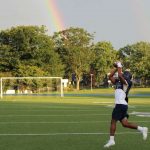
Selecting a Football Camp: What to Look for Before You Enroll
Football camps vary more than most families and players expect. Two programs that both call themselves football camps can differ completely in competitive intensity, positional focus, session length, and whether contact is permitted. Knowing what questions to ask before enrolling saves time and produces a better match between the player’s goals and what the program actually delivers.
Contact versus non-contact programs
The first decision for many families is whether to seek a full contact or non-contact program. Full contact camps involve tackling and physical play and are generally suited to players with prior organized football experience. Non-contact or flag football camps focus on skills, technique, and game understanding without full physical contact, making them more accessible to younger players or those newer to the sport. Many camps offer both formats or separate age groups by contact level, so it is worth asking specifically rather than assuming.
Residential versus day format
Residential football camps where players live on site are available across the country and are not limited by geography. Day programs require commuting and are constrained by proximity to home. The residential format typically provides a more immersive experience with longer practice days, evening activities, and a stronger sense of team community. Day programs are more accessible for families who prefer to keep players at home or who are managing costs, since residential programs add transportation, room, and board to the base tuition.
Positional focus and program scope
Football camps differ significantly in how they organize their curriculum. Some programs are position-specific, covering quarterback play, passing and receiving, kicking and punting, or lineman technique as a dedicated focus. Others cover all positions and the full range of skills across the game. College and university affiliated programs often emphasize fundamentals across positions with an eye toward development at the next level. Understanding whether a program matches the player’s position or skill development priority is worth clarifying before enrolling.
Most programs include drills, scrimmages, and on-field instruction. Some go deeper into strategy, team play, film review, and game planning. Fitness, strength, and agility training are components at many programs to varying degrees. Asking the director specifically about the daily schedule and how much time is allocated to each type of activity gives a much clearer picture than a general program description.
Competitive level and recruiting connections
Some football camps are explicitly geared toward players with aspirations to play at the collegiate level and provide exposure opportunities, recruiting connections, or coaching staff affiliated with college programs. Others are competitive in spirit but more rounded in approach, focusing on skill development and enjoyment rather than advancement. Professional players and coaches run some programs, either in a daily coaching role or as guest instructors. Knowing which environment your player is ready for and motivated by is as important as evaluating the technical quality of the instruction.
Session length and equipment
Football camp sessions range from a long weekend to multiple weeks. Some programs offer progressive multi-session formats where Session 2 builds on Session 1. Confirming whether sessions are standalone or sequential is worth doing if you are considering more than one session at the same camp.
Equipment requirements vary by program. Players are typically responsible for bringing their own helmet, mouthguard, and cleats at minimum. Some programs provide additional equipment; others require players to bring everything. Confirm with the director exactly what is needed before arrival to avoid last-minute issues on the first day.
Find football camps on Camp Channel
The Camp Channel football camps directory lists programs across the United States for a range of ages, skill levels, and session formats. General sport camps with strong football programming are also available through the sport camps directory for players who want variety alongside football instruction. Contact camps directly to confirm current session availability, age requirements, and what equipment to bring.
This post is part of the Camp Types and Programs guide on Camp Channel.
Search Summer Camp Guide

How to Choose a Music Camp: What to Look for Before You Enroll
Music camps vary far more than most families expect. Two programs that both call themselves music camps can differ completely in genre focus, instructional approach, daily structure, session length, and residential format. Knowing what questions to ask before enrolling makes the difference between a program that fits and one that does not.
Genre and instrument focus
The first and most important question is whether the program specializes in a specific genre, instrument, or both. Genre-focused camps center their curriculum on a particular musical tradition: classical, jazz, blues, rock, bluegrass, hip-hop, gospel, choir, or musical theater, among others. Some programs cover multiple genres within a single curriculum, while others are tightly focused on one style. Instrument-specific programs dedicate their instruction to a particular instrument or family of instruments, such as guitar, piano, strings, brass, percussion, or voice. A student with a clear genre or instrument preference will generally get more from a specialized program than a general one; a student who wants to explore will benefit from a broader offering.
Music versus mixed-activity programming
Camps also differ significantly in how much of the daily schedule is devoted to music versus other activities. Some programs dedicate virtually the entire curriculum to music instruction, rehearsal, and performance. Others treat music as the primary focus while still offering swimming, sports, arts, or other activities as breaks and balance. A few programs pair music with another major emphasis entirely, such as music and dance or music and visual arts. Neither approach is inherently better; the right balance depends on whether the student wants total immersion or a more varied summer experience. It is worth asking any director directly what percentage of the daily schedule is music-focused before committing.
Instructional approach: theory, technique, or performance
Beyond genre and instrument, programs differ in how they approach music education itself. Some emphasize music theory, reading, and formal technique. Others prioritize performance, improvisation, songwriting, and playing with other musicians in real time. Specific areas worth asking about include:
- Music theory and ear training
- Technique instruction and structured practice
- Songwriting, arrangement, and composition
- Solo versus ensemble and band playing
- Live sound engineering and production
- Studio recording
- Live performance and recitals
A student preparing for conservatory auditions needs a different instructional emphasis than one who wants to form a band and write original songs. Identifying the priority before searching narrows the field considerably.
Session length and structure
Music camp sessions range from a single week to a full summer. Some programs offer progressive multi-session sequences where each session builds on the previous one, which may have skill or attendance prerequisites. Others are standalone sessions that can be attended independently regardless of prior participation. Longer programs generally allow for deeper development; shorter ones offer flexibility and lower commitment. If a student is considering a multi-week program for the first time, a single-week session at the same or a similar camp is often a good way to assess fit before committing to a full summer.
Residential versus day camp
Residential music camps, where students live on site, tend to provide a more immersive experience: longer instructional days, evening rehearsals and performances, and a peer community of musicians that extends beyond formal program hours. Day camps are more accessible for families who prefer proximity or need flexibility, and many offer instruction quality equal to residential programs. The primary practical constraint on day camp attendance is geography; the program needs to be within reasonable commuting distance. Residential programs can be located anywhere and often draw students from across the country.
Residential programs are generally more expensive than day programs because room and board are included. That said, the cost gap is narrower than it appears once transportation and incidentals are factored in on both sides.
Skill level and age range
Confirming that a program’s skill level requirements and age range match the student is essential before applying. Some camps welcome absolute beginners; others require audition recordings or a minimum number of years of formal instruction. Attending a program above or below a student’s current level rarely produces a good outcome. Most programs publish their age and skill requirements clearly, and directors are generally happy to help assess fit during an initial conversation.
Find and compare music camps
The Camp Channel music camps directory lists programs across 35 states and two Canadian provinces, searchable by genre, instrument, ensemble type, and location. For an overview of how the directory is organized and what program types are available, see our guide to finding music camps by genre, instrument, and ensemble. Camp directors can add or update a listing on Camp Channel to reach families actively searching for programs.
We’ll be back in just a little bit.
This post is part of the Camp Types and Programs guide on Camp Channel.
Search Summer Camp Guide

Father-Son and Mother-Daughter Camps: What Parent-Child Programs Offer
Many summer camps, conference centers, and retreat facilities offer special sessions tailored for parent-child participation. These programs are structurally distinct from family camps: they are typically limited to a single parent and one or more children of the same gender, and they are designed specifically around the one-on-one dynamic rather than the full family unit. For families considering a residential overnight camp, a parent-child weekend can also serve as a meaningful first introduction to the camp environment.
Format and timing
Most parent-child programs occur just before or after a camp’s primary summer session and span a long weekend, typically Friday through Sunday. Some religious-affiliated programs offer more extensive parent-child programming options across a broader portion of the summer calendar. The condensed format is intentional: it provides enough time for meaningful shared experiences without requiring the same extended commitment as a full camp session.
Who can attend
Programs are often labeled as father-son or mother-daughter but most are flexible about who fills the parent role. A guardian, grandparent, or special mentor is typically welcomed in place of a biological parent. Multiple children of the same gender attending with a single adult are generally permitted as well. Confirming the specific policy with the camp before registering avoids any confusion, particularly for families with non-traditional configurations.
Many parent-child programs extend eligibility to younger children who would not yet be old enough to attend a residential camp independently. In this sense the program functions as a preview: a child experiences the camp environment, activities, and overnight setting with the security of a parent present, which can make the transition to attending independently in a future summer feel considerably less daunting.
What programs typically include
Activities vary depending on the hosting facility and its general programming profile. A parent-child weekend at a traditional general program overnight camp will typically offer a broad range of individual, group, and all-camp activities alongside communal dining, campfires, and special events. A father-son weekend at a sport-specific camp, such as a football or basketball camp, will center its programming on that sport and related activities. Religious camps often incorporate spiritual or faith-based programming as a component of the parent-child experience.
Most programs include a basic complement of staff to handle safety, meals, activity coordination, and general operations. Equipment requirements vary: some programs provide everything needed while others ask participants to bring specific items such as sleeping bags, athletic gear, or particular footwear. Asking the director for a full packing list and activity schedule before arrival prevents last-minute surprises.
Costs and value
Pricing varies by facility and program length but is often reasonable given that fees typically cover lodging, meals, scheduled activities, and general use of camp facilities for the duration of the session. Fees for additional children are sometimes discounted. The combination of activities, setting, and dedicated one-on-one time creates a context for parent-child bonding that is genuinely difficult to replicate in everyday life.
Find parent-child programs on Camp Channel
Use the Camp Channel full camp search to find programs and contact camps directly to ask about parent-child weekend availability. Not all camps advertise these sessions prominently, so a direct inquiry to a director you are already considering is often the most efficient way to find out what is available and when.
This post is part of the Camp Types and Programs guide on Camp Channel.
Search Summer Camp Guide

Sport Camps: Finding the Right Athletic Program for Your Child
Sports camps give young athletes a focused environment to develop skills, build fitness, and compete or collaborate with peers who share the same interests. The range of programs available is broad, from highly structured single-sport academies that mirror college coaching environments to relaxed multi-sport general camps where trying new activities is the primary goal. Matching the right program to a child’s current skill level, competitive ambitions, and overall temperament matters as much as the sport itself.
Single-sport versus multi-sport programs
The most fundamental distinction in sports camp programming is whether a camp focuses on one sport or many. Single-sport camps dedicate the majority of the daily schedule to skill development, position-specific training, drills, and competitive play within one discipline. These programs are well suited to athletes who are already committed to a sport and want focused development, potentially at a level that resembles organized team training. Multi-sport general athletic camps offer exposure to a broader range of activities and are better suited to younger campers or those who have not yet settled on a primary sport, or who simply want variety alongside athletic development.
Specialty sports with dedicated programs
The Camp Channel directory includes sport camps across a wide range of athletic disciplines. Several sports have their own dedicated category pages with substantial listing depth, including football, golf, tennis, basketball, baseball, soccer, and equestrian programs. Others appear within the broader sport camp category, which functions as an umbrella for programs that may not fit neatly into a single-sport classification or that offer a combination of sports as their primary program emphasis.
Some programs listed under sport camps are genuinely multi-sport in design; others focus on a specific sport but have been self-classified by the camp director in a way that creates natural overlap with the dedicated sport category pages. When searching, it is worth checking both the sport-specific category and the broader sport camp category to ensure a complete picture of what is available in a given location or for a given sport.
Skill level, age, and competitive intensity
Sports camps vary considerably in how competitive and structured they are. At one end are elite development programs that recruit athletically advanced campers, operate with structured coaching, and prepare participants for high school or collegiate competition. At the other end are recreational programs where participation, fun, and exposure to sport are the goals rather than performance outcomes. Most programs fall somewhere in the middle, offering solid instruction within a positive camp environment.
Age range and skill level requirements are worth confirming directly with any program before enrolling. A camp designed for high school varsity athletes will structure its days differently than one designed for elementary-age beginners, and placing a child in either a program that is too advanced or too basic rarely produces a good experience. Many directors are happy to discuss fit during an initial conversation.
Residential versus day format
Sports camps are available in both residential and day formats. Residential programs provide the immersive experience of living alongside teammates and coaches, which tends to accelerate both skill development and the social bonds that are a defining feature of the camp experience. Day programs are more accessible for families who need geographic flexibility or who are not ready for an overnight commitment, and many offer instruction quality equal to residential programs within a shorter daily schedule.
Find sport camps on Camp Channel
The Camp Channel sport camps directory lists programs across the United States covering a wide range of athletic disciplines. You can browse by state or search across the full directory to find programs that match your child’s sport, age range, and preferred format. Camp directors offering athletic programs can add or update a listing on Camp Channel to connect with families searching for programs in your sport.
This post is part of the Camp Types and Programs guide on Camp Channel.
Search Summer Camp Guide


